If you’ve ever watched a motorcycle vlog with crystal-clear audio and zero wind noise, just know this – that rider didn’t get there easily.
Because honestly? I’m fed up.
Not with riding. Riding is the fun part. It’s the audio inside the helmet that’s doing my head in.
Expectation vs Reality
When I first started moto-vlogging, I genuinely thought audio would be straightforward. Stick a mic in the helmet, press record, off you go. That illusion didn’t last long.
What I actually ended up with was:
- Poor audio quality
- Crackling and interference
- Wind noise drowning out my voice
- Random pops and distortion
- Volume levels that never seem consistent
And that’s after trying multiple setups.
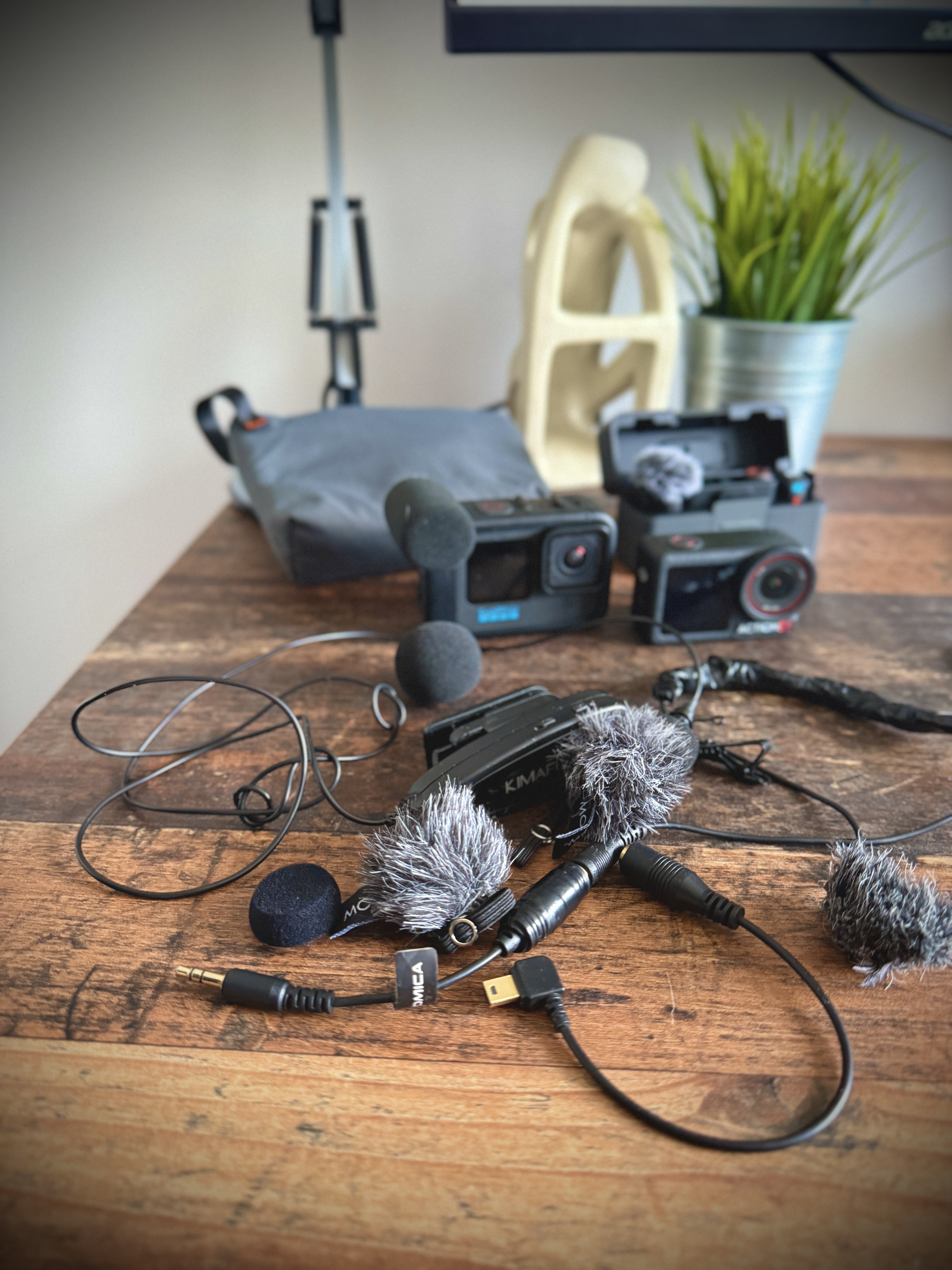
Lavalier Mics: Not the Answer I Hoped For
Like most riders, I started with lavalier microphones. Small, cheap, widely recommended. On paper, they’re perfect.
I’ve used lav mics with:
- GoPros
- Media Mods
- And now the DJI Action 5
Yet the same problems keep cropping up.
- Mic placement helps — sometimes.
- Foam covers help — a bit.
- Careful cable routing reduces crackling — until it doesn’t.
Inside a helmet, everything works against you:
- Turbulent airflow
- Engine and road vibration
- Helmet padding pressing on the mic
- Cables shifting while riding
- Heat and moisture build-up
Even when I think I’ve nailed the setup, I’ll get home, load the footage, and hear crackling, static, or audio that sounds muffled and distant.
Media Mods: Useful, But Not a Fix
I also gave media mods a proper go, hoping they’d sort things out. They’re handy for ports and flexibility, but they don’t solve the core problem.
You still rely on an external mic, and that puts you straight back into the same loop of wind noise and interference.
My new DJI Action 5 has been solid overall as a camera, but once again, the lav mic ends up being the weak point.
The Most Frustrating Part
The worst thing is the lack of consistency. I’ve spent hours:
- Adjusting mic positions
- Watching tutorials
- Copying setups from other moto-vlogger
Some rides sound acceptable. Others sound terrible. And you often don’t know until it’s too late. As a vlogger, that’s painful. You want something that works every time, not just on a good day.
Why Audio Matters More Than You Think
Viewers will forgive shaky footage. They’ll forgive missed shots. They won’t stick around for bad audio. Moto-vlogging is about talking through the ride, sharing thoughts, reacting in real time. If people can’t hear you clearly, the whole thing falls apart.
The Next Step: DJI Mic Mini 3
So here we are – another potential solution. My next investment is the DJI Mic Mini 3, a wireless microphone system.
Why wireless?
- No cables rubbing inside the helmet
- Less chance of crackling
- Cleaner signal
- Better control over audio levels
- Designed specifically for content creators
I’m hoping it finally tackles:
- Interference
- Inconsistent volume
- And the never-ending wind noise battle
Will it be perfect? Probably not. Helmet audio is still one of the trickiest things in moto-vlogging. But at this point, I’m ready to try something more reliable.
Final Thoughts
Moto-vlogging looks easy from the outside, but audio is by far the hardest part. Cameras keep improving. Stabilisation is incredible. Video quality is brilliant. But clean, reliable helmet audio? Still a nightmare.
If you’re struggling with the same issues, you’re not alone. I’m still testing, still learning, and still chasing a setup that just works.
Hopefully, the DJI Mic Mini 3 gets me closer.
Until then, I’ll keep riding, keep experimenting, and keep talking into a helmet that refuses to cooperate.
Feel free to let me know your thoughts and recommendations in the comments below.


Leave a Reply