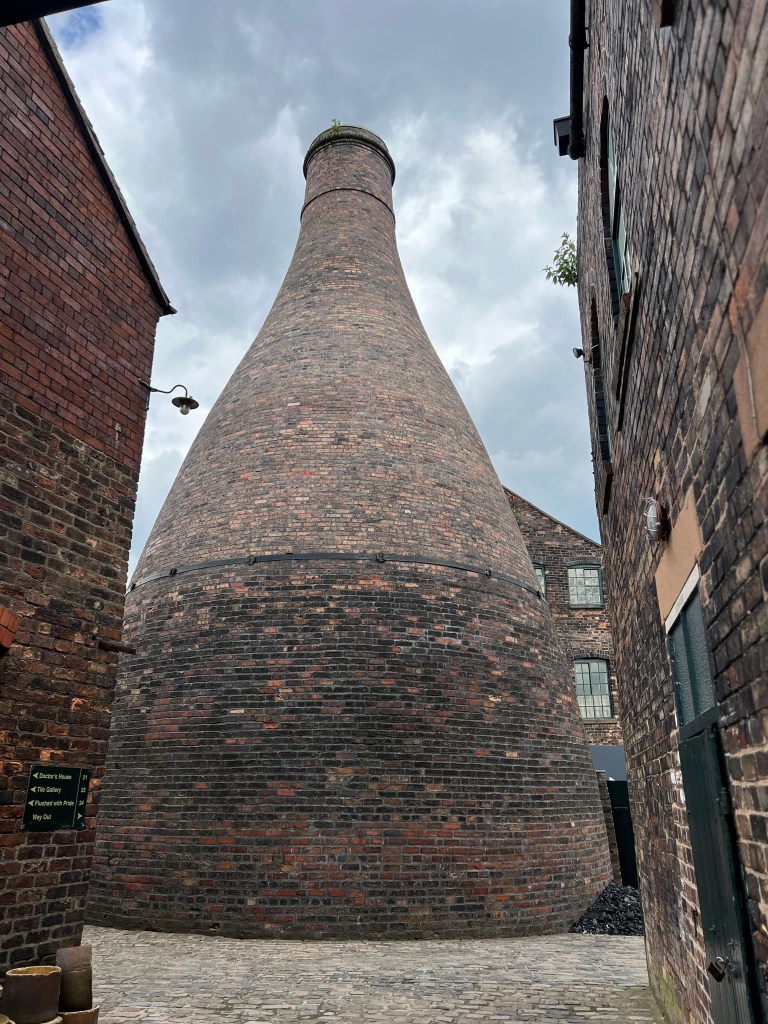
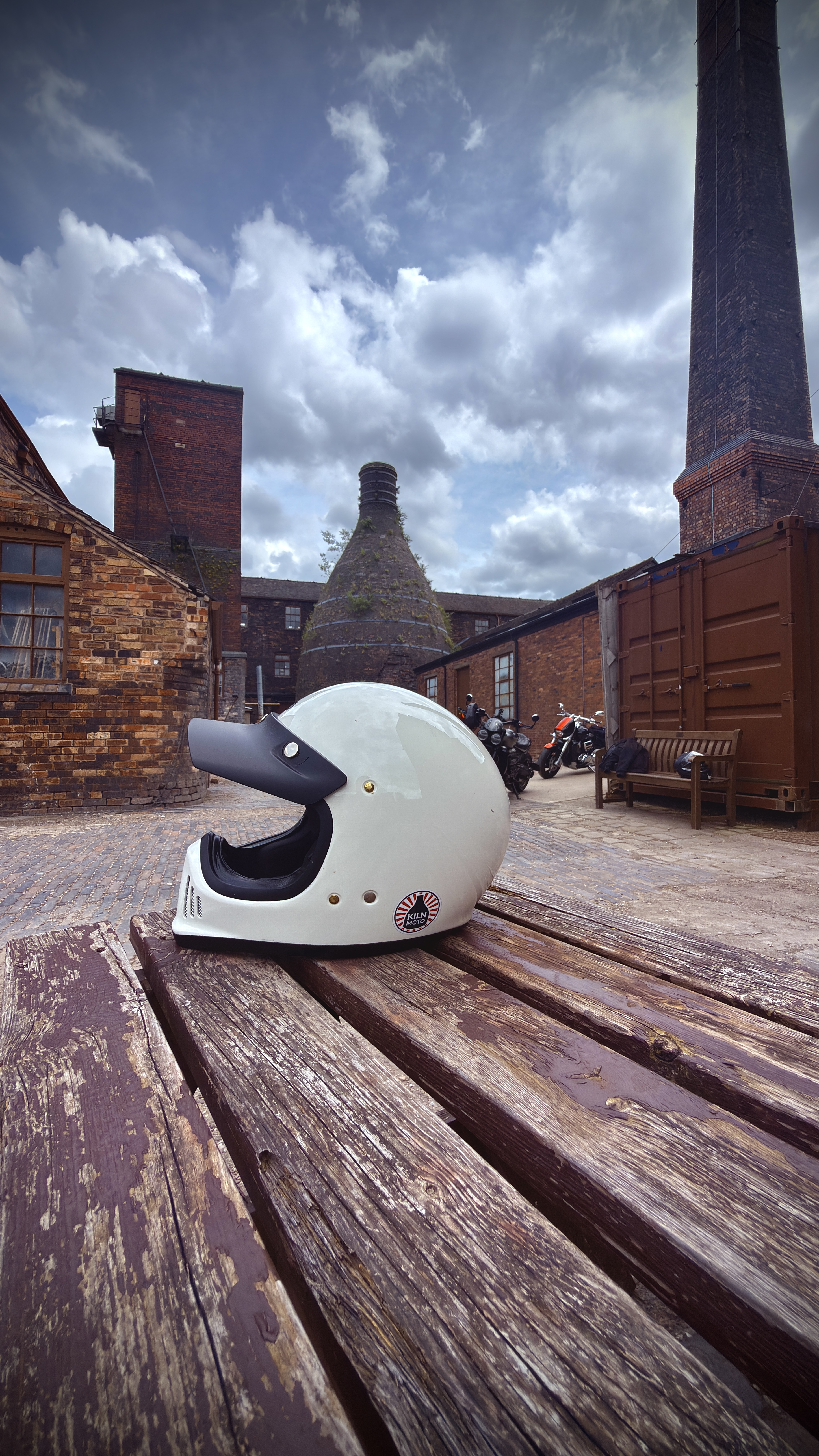
This post is a little different. It’s not about motorcycles. But stick with me, because it’s very much connected to Kiln Moto and why I chose that name for my website and social media accounts.
This post is about identity. It’s about where I come from. And it’s about one of the most recognisable symbols of Stoke-on-Trent – the bottle kiln.
These structures are much more than old brick buildings. They tell the story of the people who built this city.

Why Bottle Kilns Represent Stoke-on-Trent
Some landmarks instantly tell you where you are. London has Big Ben. Liverpool has the Liver Building. And Stoke-on-Trent has its bottle kilns.
You don’t need to understand pottery to appreciate them. They’re part of the city skyline, part of our history and part of thousands of families stories.
For generations, these kilns represented hard work, skill and craftsmanship.
They represent The Potteries.
47 Kilns: A Project Preserving Stoke-on-Trent’s History
Every time I see a bottle kiln, I’m reminded that Stoke-on-Trent was built by people who created things with their hands.
People who cared about their craft. People who helped make this city known around the world.
That’s why Thomas Carnes’ 47 Kilns project immediately caught my attention.
Thomas has taken on the challenge of creating 47 miniature bottle kilns by hand – one representing each surviving bottle kiln still standing across Stoke-on-Trent today.
The project captures something important. It’s not just about making models.
It’s about keeping memories alive.
One thing I really admire about Thomas’ work is how openly he shares the process online.
Years ago, a project like this might have only reached people locally. Today, Instagram, TikTok and YouTube allow local stories to travel much further. A single video about a bottle kiln can introduce someone thousands of miles away to Stoke-on-Trent’s history.
It can make people curious.
It can make people reconnect with where they came from.
And that matters.
Why Are There Only 47 Bottle Kilns Left?
The number 47 is significant. Before the Second World War, Stoke-on-Trent had around 2,000 bottle kilns. They dominated the city’s skyline and were at the heart of the ceramics industry. Today, only 47 remain across 27 sites.
Thankfully, these surviving bottle kilns are now protected as listed buildings.
But their survival is fragile.
Once they disappear, a huge part of the city’s story disappears with them.


Bottle Kilns Are More Than Buildings
To someone visiting Stoke-on-Trent for the first time, a bottle kiln might simply look like an unusual brick chimney.
But to local people, they mean something else.
They represent:
- Generations of pottery workers
- Families connected to The Potteries
- Craftspeople whose work travelled around the world
They represent painters, throwers, mould makers and artists.
They represent a city built on making things.
One thing I love is that every kiln is slightly different. Many were designed around individual pottery works, giving each one its own character. And that feels very Stoke-on-Trent.
Same foundations.
Different stories.
Celebrating Stoke-on-Trent’s Industrial Heritage
Thomas Carnes’ project is an example of a wider movement celebrating Stoke-on-Trent’s industrial heritage.
Another important example is FORTYSEVEN: The Last Bottle Ovens and Kilns of The Potteries.
This long-form photography project documents the remaining bottle ovens and explores their connection to memory, identity and conservation.
The project has been exhibited at:
- Keele University’s Chancellor’s Gallery
- Gladstone Pottery Museum
- Middleport Pottery’s bottle oven
It was also displayed alongside historic photographs from Keele University’s Warrillow Collection, creating a conversation between Stoke-on-Trent’s past and present.
The project later gained national recognition through coverage in The Guardian and selected work being shown at the Royal Academy of Arts Summer Exhibition.
These projects prove that our industrial heritage still has relevance today.
Why Brands and Filmmakers Are Also Looking At Stoke-on-Trent
Something interesting has happened. Our city that was once seen as a symbol of a declining industry but it is now attracting national attention from big brands and film makers.

BELSTAFF
In 2024, British heritage brand Belstaff chose Gladstone Pottery Museum for its centenary celebrations.
The location made perfect sense. A company built around craftsmanship and British manufacturing history was celebrating its story and connection with the city, among the very buildings that represent those same values.
The bottle kilns weren’t just scenery. They were part of the message.
Photo credit: Rich Hunter
Stoke-on-Trent On Screen
The city has also gained attention through film and television.
- Peaky Blinders used locations around the city and leant into Stoke-on-Trent’s industrial character to help create its distinctive atmosphere.
- The Great Pottery Throw Down has also introduced audiences across the UK to the skill and creativity behind pottery.
These projects show another side of Stoke.
Not a city stuck in the past.
A city still creating.
Why Stoke-on-Trent’s Kilns Matters To Me
Stoke-on-Trent is more than six towns. It’s a city. A city shaped by its people.
Its history can be found in those bottle kilns, but also in the dialect, the Staffordshire oatcakes and the football clubs, founded in the 1800’s, that have been part of local life for generations.
But most importantly, it’s found in it’s people, people like me.
This is where I grew up. It shaped my values of:
- Hard work
- Creativity
- Looking out for others
That’s why I chose the name Kiln Moto – it was never just about motorcycles. It was about identity. It was about taking something rooted in where I come from and giving it a new voice and from a whole new angle.
Final Thoughts
The bottle kilns of Stoke-on-Trent aren’t just reminders of what came before. They show that this city still has stories worth telling.
Projects like Thomas Carnes’ 47 Kilns prove that heritage doesn’t have to sit quietly in a museum. It can inspire people. It can create new ideas. It can make people proud of where they come from.
Every restored kiln. Every photograph shared. Every creative project inspired by The Potteries. They all help keep the story alive.
Ultimately, Stoke-on-Trent isn’t defined only by what it used to make. It’s defined by the people who are still creating, shaping and representing the City today.

Additional Viewing
This video looks at how the pottery industry had both as positive and negative affect on the city of Stoke-on-Trent.


Leave a Reply