
THE MOTORCYCLE FUNDAMENTALS SERIES – BY KILN MOTO
Filtering (or lane splitting) rules differ worldwide, so always check local regulations before travelling. This blog focuses specifically on the UK, where filtering is one of the most misunderstood skills for motorcyclists.
This guide explores what filtering is, how to do it safely, the risks involved, its impact on journey efficiency, and why it plays an essential role for emergency and urgent service riders.
What is Filtering on a Motorbike?
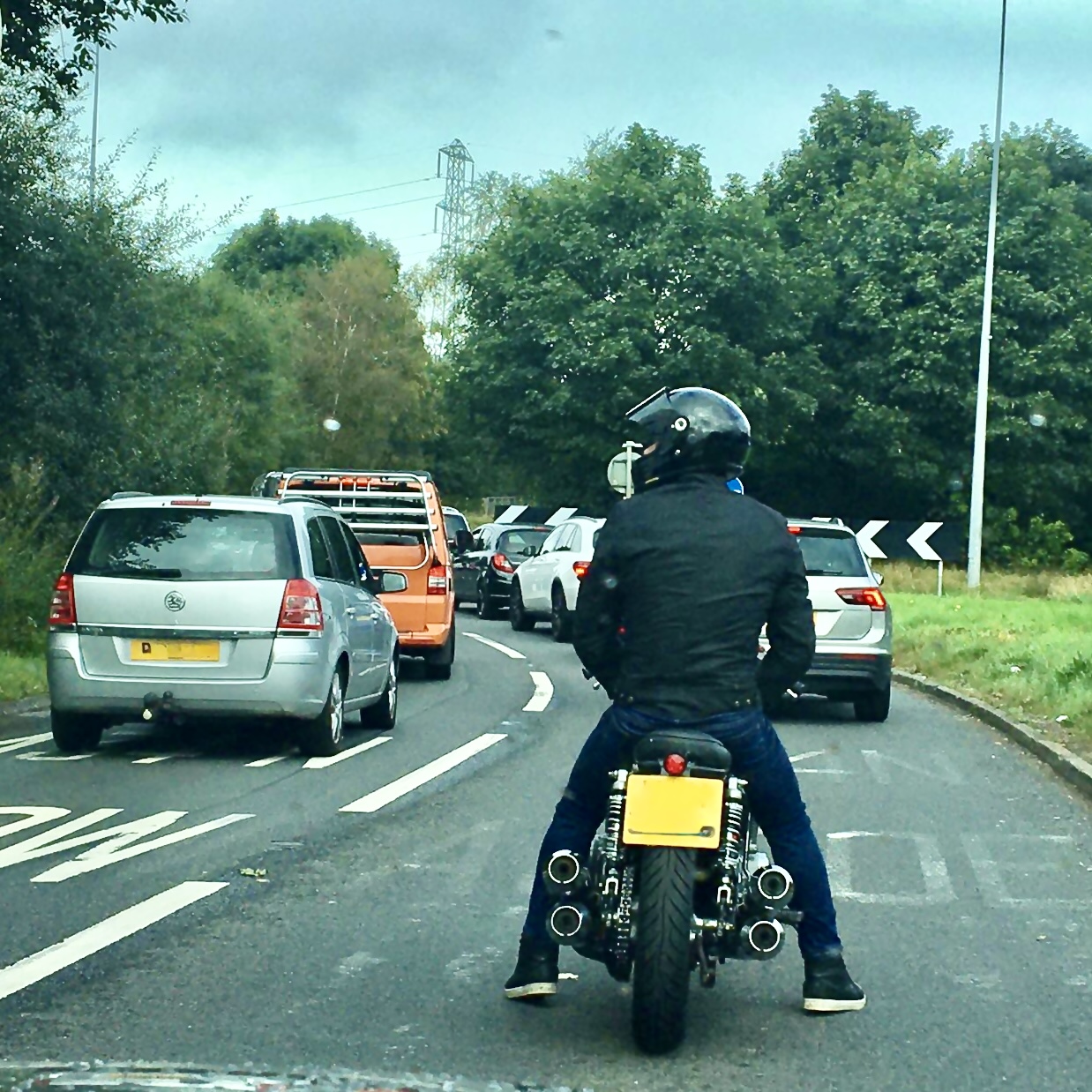
Filtering is a riding technique that allows motorcyclists to move between lanes of slow-moving or stationary traffic, helping them avoid queues and maintain steady progress. When carried out correctly, filtering can make journeys quicker, smoother, and less stressful. However, if done poorly, it can increase risk and reduce safety.
Is Filtering Legal On A Motorbike?
In the UK, filtering is legal, provided it is performed safely and responsibly. Riders must keep their speed low relative to surrounding traffic, stay alert to potential hazards, and be mindful of how other road users may react. Unsafe or high-speed filtering could be considered careless or dangerous riding and may result in legal consequences.

Best Practice for Safe Filtering on a Motorcycle
Safe filtering is based on a consistent set of principles recognised across advanced rider training. It should only be carried out in slow-moving or stationary traffic, with the rider travelling only slightly faster than surrounding vehicles. Filtering at higher speeds increases risk and reduces the time available to react.
Positioning and visibility are critical. Riders should aim to remain where they can be seen, avoiding blind spots and watching for clues in driver behaviour such as wheel movement or mirror checks. Road rules and markings must always be followed, including solid white lines, pedestrian crossings, and restricted areas.
Good filtering relies on constant observation. Riders should scan ahead for hazards such as opening doors, sudden lane changes, or vehicles turning across their path. Maintaining space around the motorcycle and keeping an escape route in mind allows time to respond safely. When applied consistently, these habits make filtering smoother and more predictable for everyone.
The Risks Involved in Filtering on a Motorbike
Filtering increases exposure to potential hazards. Tight spaces between vehicles can restrict visibility and reduce reaction time. Other road users may not expect a motorcycle to pass between lanes and can move suddenly or without signalling.
Junctions and side roads present particular risks, as vehicles may pull out or turn across the rider’s path with little warning. These factors mean filtering requires concentration, awareness, and sound judgement at all times.
Does Filtering Improve Journey Progress?
Filtering helps maintain momentum in slow or stationary traffic. Smooth and selective filtering, rather than attempting to exploit every small gap, maximises safety while still making progress. In faster traffic or where gaps are tight, the time saved is often minimal, and the risk increases.
Balancing Safety and Convenience
Good filtering balances efficiency with safety. Riders should never treat filtering as an entitlement or a shortcut. Cautious, measured filtering that matches traffic flow, maintains a safe speed, and anticipates hazards provides the best outcomes. Aggressive filtering, on the other hand, increases risk and can lead to conflicts with other road users.
Driver Behaviour and Reactions to Filtering Motorbikes
Filtering can trigger a range of reactions from other road users. Some drivers may be surprised or frustrated when a motorcycle filters past them, while others might not check their mirrors or anticipate a rider alongside. Understanding these human factors is key to safe filtering, and riders should never assume drivers will cooperate.
Reactions can range from patience and understanding to irritation or even aggressive behaviour. Many drivers are unaware of filtering rules or may feel threatened when a bike overtakes, sometimes resulting in sudden lane changes or blocking. To reduce conflict, riders should stay visible, use signals where appropriate, maintain a safe speed, and only filter when confident it’s safe. Remaining calm, predictable, and courteous not only keeps riders safe but also helps other road users adjust, lowering stress and the risk of accidents.
Emergency and Medical Motorcycles: Why Filtering Is Essential
Filtering isn’t just a convenience for everyday riders – it’s a vital skill for emergency vehicles like police motorcycles and urgent medical bikes, such as blood bikes and doctor bikes. These riders often face time-sensitive trips where delays can have serious consequences, making safe, controlled, and professional filtering an essential part of their work. Let’s look at this in a bit more detail:
Police Bikes – Police motorcycles use filtering to navigate traffic efficiently, particularly when responding to urgent incidents. Trained officers filter carefully, balancing speed with safety, and use their advanced skills to anticipate vehicle movements and maintain control. While sirens and lights may alert other road users, filtering is still conducted with caution to avoid accidents. For police riders, filtering is a strategic tool that enables effective law enforcement and emergency response.
Blood Bikes – Blood Bikes transport urgent medical supplies such as blood, plasma, and laboratory samples between hospitals. Filtering allows these riders to maintain progress in congested traffic, ensuring that life-saving deliveries reach their destination promptly. Riders are trained at an advanced riding level (IAM or ROSPA) and also undergo further assessment by the Blood Bike Team before becoming a rider. For Blood Bikes, filtering is a calculated manoeuvre that directly supports patient care.
Doctor Bikes – Doctor bikes or rapid-response medical motorcycles operate in a similar time-critical context. They respond to emergencies where every second counts, carrying essential medical equipment and sometimes even blood or medications. Filtering is vital for maintaining momentum through congested streets. Like blood bike riders, they are trained in advanced riding techniques, emphasising safety, visibility, and situational awareness. Filtering is not optional – it is an essential component of delivering rapid medical care.’


What do the Advanced Riding Experts Recommend on Filtering?
Guidance from IAM RoadSmart
IAM RoadSmart advises that filtering should be carried out at low, controlled speeds, typically no more than 10 to 15 miles per hour faster than the surrounding traffic. The emphasis is on observation and planning ahead, with riders continuously assessing hazards such as junctions, turning vehicles, and changes in traffic flow.
Maintaining good positioning is essential, ensuring there is space around the motorcycle and a clear escape route if conditions change. Riders are also encouraged to remain aware of other motorcyclists and to manage their own concentration, particularly in busy or demanding conditions.
A key principle is that filtering is not simply about whether there is space, but whether it is safe to proceed. If there is any uncertainty, the safest option is to wait.
Guidance from RoSPA
RoSPA promotes a cautious and measured approach to filtering. Riders should only filter when conditions allow it to be done safely and at a speed that enables them to stop comfortably if needed.
Maintaining a safety buffer is important. This means allowing space from other vehicles and being prepared for sudden movements such as doors opening, vehicles changing lanes, or pedestrians stepping into the road.
Extra care is needed in areas where risk is increased, including junctions, crossings, and locations with limited visibility. Anticipating the actions of other road users is a key part of reducing risk, allowing the rider to respond early rather than react at the last moment.
Final Thoughts on Filtering
Filtering is a legitimate and practical skill when performed with care, awareness, and respect for other road users. It should be used judiciously, never at the expense of safety. Riders who exercise good judgement, follow the rules, and remain alert to the movements of others will find filtering both efficient and safe.
Having filtered both on my own motorcycle and as a Blood Bike rider, I understand how challenging the experience can be. It’s easy to appreciate the frustration felt by drivers stuck in slow-moving or stationary traffic, and riders should show a degree of empathy. That said, I have encountered drivers who deliberately try to block riders from filtering, which creates unnecessary risk for everyone involved.
In these situations, the most important question to ask yourself is: can I filter safely? If there is any doubt at all, don’t proceed – wait until you are confident it’s safe. It’s never worth taking the risk, and in most cases, a better opportunity to filter will present itself shortly.
Let me know your thoughts on filtering in the comments below.

Leave a Reply