
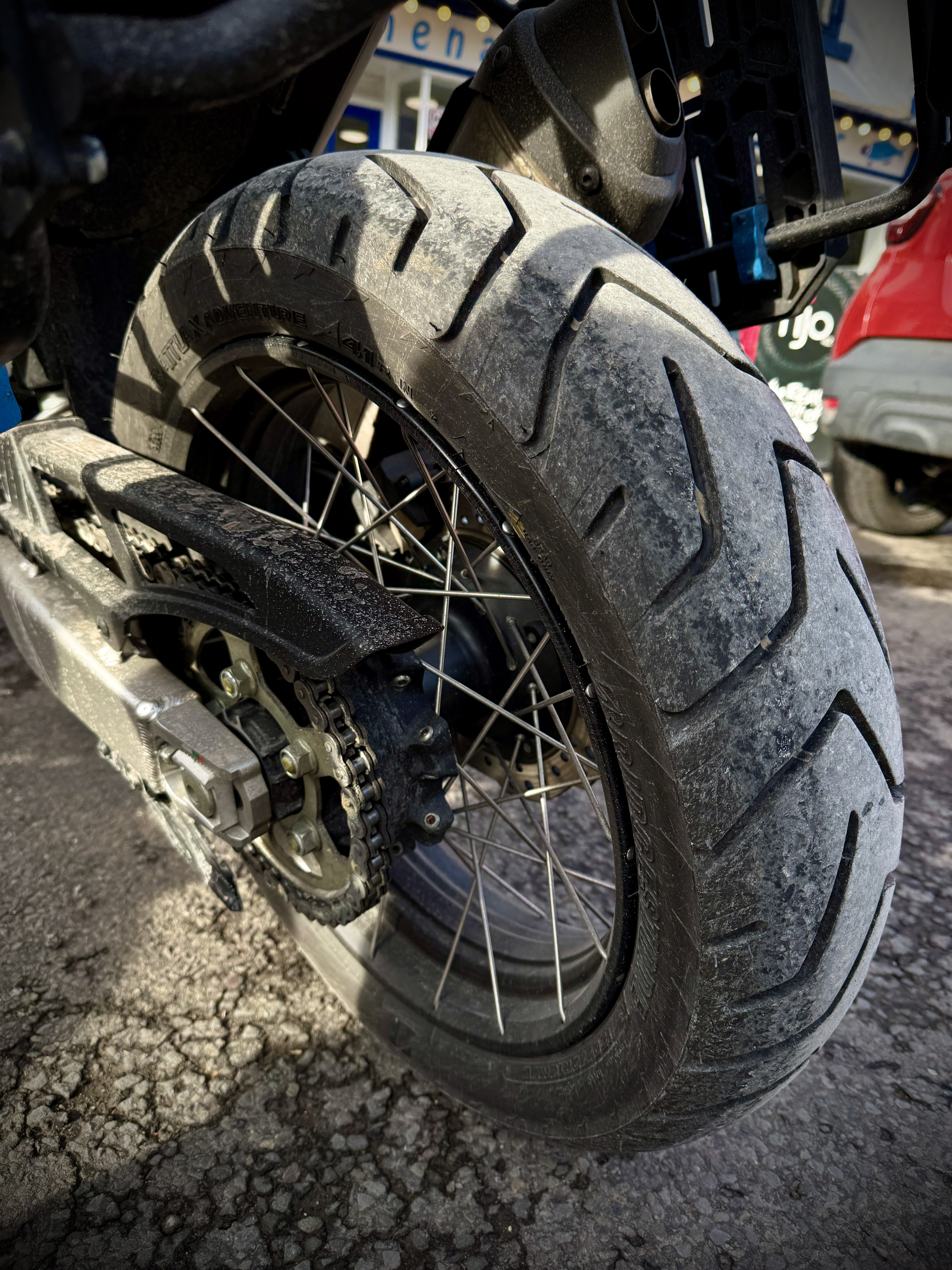
THE MOTORCYCLE FUNDAMENTALS SERIES – BY KILN MOTO
Motorcycle tyres are one of the most important components affecting both safety and performance. As the only part of the motorcycle that touches the road, tyres influence braking ability, stability, handling, and comfort. Choosing the correct tyres for your motorcycle and riding style can improve the overall riding experience and help maintain safe control in different conditions.
Many riders replace tyres simply by matching the size printed on the sidewall. While size is important, other factors such as rubber compound, tread design, riding conditions, and the type of motorcycle should also be considered. Understanding these elements can help riders select tyres that perform reliably and last as expected.

Why Choosing the Right Tyres Matters
Motorcycle tyres are engineered to balance grip, durability, and stability. Manufacturers design tyres with specific characteristics depending on how a motorcycle is expected to be ridden.
For example, tyres designed for high-performance sport bikes focus heavily on grip and cornering ability. In contrast, tyres for touring motorcycles prioritise longevity and stability over long distances. Using the wrong tyre type can affect braking distances, reduce grip, and lead to uneven wear.
Correct tyres ensure that the motorcycle handles as intended by its manufacturer and performs safely in both dry and wet conditions.
Matching Tyres to Motorcycle Types
Different motorcycles place different demands on their tyres. Selecting tyres that suit the design of the bike helps maintain proper handling and ride quality.
Sport Motorcycles
Sport motorcycles are built for speed, responsive steering, and strong cornering performance. Tyres designed for these bikes typically use softer rubber compounds that provide excellent grip on dry roads.

These tyres often have fewer tread grooves than touring tyres, which increases the amount of rubber contacting the road surface during cornering.
The trade-off is that softer compounds tend to wear faster, especially during aggressive riding or frequent high-speed use.
Sport tyres are most suitable for riders who prioritise performance, precision handling, and confident cornering.
Touring Motorcycles
Touring motorcycles are designed for long-distance travel, comfort, and sustained motorway riding. Tyres for touring bikes are engineered to provide stability, durability, and consistent performance over many miles.

These tyres usually use harder rubber compounds that resist wear and extend tyre life.
Their tread patterns are designed to disperse water efficiently, which improves grip during wet weather riding.
Riders who regularly commute or travel long distances often benefit from the durability and stability offered by touring tyres.
Adventure and Dual-Sport Motorcycles
Adventure and dual-sport motorcycles are intended to handle both paved roads and off-road terrain. As a result, their tyres must balance road stability with off-road traction.

Some tyres in this category are designed primarily for road use with light off-road capability, while others feature larger tread blocks for improved grip on loose surfaces such as dirt, gravel, or mud.
Riders should consider how often they ride off-road when choosing tyres in this category.
Those who ride mostly on tarmac may prefer road-focused adventure tyres, while riders who explore rough trails may need more aggressive tread patterns.
Cruiser Motorcycles
Cruiser motorcycles generally emphasise relaxed riding, comfort, and stability rather than aggressive cornering.

Tyres for cruisers are designed to handle heavier bikes and provide consistent grip during steady cruising speeds.
These tyres typically feature durable compounds that support longer service life and smooth handling.
They are also designed to remain stable during straight-line riding, which suits the riding style commonly associated with cruiser motorcycles.
Understanding Tyre Compounds
The rubber compound used in a tyre plays a significant role in determining grip and longevity.
Softer rubber compounds tend to provide greater traction because they conform more closely to the road surface. This can improve braking performance and cornering confidence, particularly in dry conditions. However, tyres with softer compounds usually wear out more quickly.
Harder rubber compounds offer longer lifespan and improved resistance to wear. This makes them ideal for touring motorcycles or riders who regularly cover long distances.
Many modern motorcycle tyres use dual-compound technology. These tyres feature a harder centre section for durability during straight-line riding and softer rubber on the edges to improve grip when cornering.
What Do The Numbers & Letters Mean on Your Tyre’s Sidewall
The markings on a motorcycle tyre’s sidewall are essentially a coded summary of its size and performance limits. A common example like 180/55 ZR17 tells you several things: the 180 refers to the tyre’s width in millimetres, the 55 indicates the sidewall height as a percentage of that width, and the 17 shows the wheel diameter in inches that the tyre fits.
The lettering, such as ZR, points to the tyre’s construction (radial) and its suitability for higher speeds. You’ll often find an additional code like 73W, which combines the load index (how much weight the tyre can safely carry) with the speed rating (the maximum speed it’s designed to handle under proper conditions). Reading these markings correctly helps ensure you pick a tyre that matches your motorcycle’s specifications and delivers safe, reliable performance.
Motorcycle Tyre Tread Patterns and Road Conditions
The tread pattern of a motorcycle tyre affects how effectively it disperses water and maintains contact with the road surface.
Sport tyres often have minimal tread patterns because they are designed primarily for dry road performance. Touring tyres typically include deeper grooves that channel water away from the tyre surface, helping maintain traction in wet conditions.
Tyres designed for off-road use feature larger tread blocks. These blocks dig into loose surfaces and provide improved grip on dirt, sand, or gravel.
Choosing the correct tread design ensures the tyre performs effectively in the environments where the motorcycle is used most frequently.
Considering Weather and Climate
Weather conditions can influence tyre performance. Riders who frequently travel in wet conditions may benefit from tyres with tread patterns designed to disperse water more effectively.
Temperature also affects tyre performance. Some compounds remain flexible in cooler conditions, allowing the tyre to maintain grip when the road surface is cold. In warmer climates, tyres designed for dry conditions may perform better due to their increased resistance to heat and wear.
Considering local riding conditions helps ensure the tyres deliver reliable performance throughout the year.
Following Tyre Manufacturer Specifications
Motorcycle manufacturers specify tyre sizes, load ratings, and speed ratings that are suitable for each model. These specifications are provided in the owner’s manual and often printed on the motorcycle itself.
Using tyres that match these recommendations helps maintain the motorcycle’s handling characteristics and ensures that the tyres can safely support the bike’s weight and performance capabilities.
Installing tyres with incorrect specifications can negatively affect stability, braking performance, and overall safety.
Motorcycle Tyres – Useful Resources
Here is a selection of useful links with further information about motorcycle tyres.
- Motorcycle Tyre Dimensions Explained | Blackcircles.com
- Motorcycle Tyre Parts Explained | Dunlop
- Motorcycle Tyre Sizes Explained – Two Tyres
- Motorcycle Tyres: Cracking, Pressure & Tread Depth – TyreSafe
- Motorcycle Tire Guide 101 and FAQ – RevZilla
Final Thoughts
Selecting the right motorcycle tyres requires careful consideration of the motorcycle type, riding style, road conditions, and expected mileage. Sport riders may prioritise grip and cornering performance, while touring riders often need durability and stability over long distances. Adventure riders require tyres capable of handling both paved roads and off-road terrain.
By understanding tyre compounds, tread patterns, and manufacturer specifications, riders can make informed decisions that improve safety and enhance the riding experience. Choosing appropriate tyres ensures the motorcycle performs as intended and remains reliable across a wide range of riding conditions.
Disclaimer: The information in this article is provided for general guidance on motorcycle tyres and their selection. While every effort has been made to ensure accuracy, tyre specifications, performance characteristics, and manufacturer recommendations may vary between motorcycles and tyre brands.
Always refer to your motorcycle’s owner’s manual and follow the tyre manufacturer’s guidelines when selecting, fitting, or maintaining tyres. This article may include links to third-party websites for additional information. The author and website do not control the content of these external sites and accept no responsibility or liability for any information, products, services, or damages that may result from accessing or relying on content from these linked websites.
Riders should use their judgment and seek advice from a qualified mechanic or tyre specialist if unsure. Incorrect tyre choice or installation can affect safety, handling, and performance.


Leave a Reply to KILN MOTOCancel reply