For many riders, myself included, the sharp crackle of a two-stroke engine is one of the most recognisable sounds in motorcycling. For decades these machines were a common sight on British roads and race circuits. During the 1970s, 80s and 90s they were especially popular in smaller capacity classes, delivering thrilling performance from compact and lightweight engines.
When I first started riding in 1990, two-stroke motorbikes felt like a rite of passage. Most learner-legal machines were two-strokes, and they were everywhere. Japanese manufacturers had fully embraced the race-replica trend at the time, drawing inspiration from the dominance of two-stroke machines in Grand Prix racing. The styling and technology seen on the MotoGP bikes of that era gradually filtered down through the ranges, influencing everything from larger sport bikes right through to the 125cc learner models.

Today, however, two-stroke motorcycles have almost completely disappeared from the UK’s mainstream market. Modern showrooms are dominated by four-stroke machines, while the distinctive sound and smell of a high-revving two-stroke is now more likely to be encountered at classic bike events or historic race meetings.
Understanding how this change happened requires looking at the strengths of the two-stroke engine, the environmental regulations that followed, and how the motorcycle industry adapted.
Why Two-Stroke Motorcycles Became So Popular
Two-stroke engines built their reputation on performance. Their design allows a power stroke to occur every revolution of the crankshaft, unlike a four-stroke engine which requires four piston movements to complete a full cycle. In practice, this means a two-stroke engine can generate impressive power relative to its size.
This design offered several advantages. The engines were mechanically simpler because they required fewer internal components such as valves and camshafts. This reduced weight and manufacturing complexity. Motorcycles powered by these engines were therefore often lighter and more responsive than many of their four-stroke rivals.
For riders, the most memorable characteristic was the surge of acceleration that arrived once the engine entered its power band. That sudden rush of power helped give two-stroke motorcycles their reputation for excitement and unpredictability.
Because of these qualities, two-stroke engines became dominant in several racing categories for many years.
The Environmental Challenge
Despite their strengths, two-stroke engines had a major drawback.
Traditional designs rely on a mixture of petrol and lubricating oil for combustion and engine lubrication. During operation, some of this mixture can pass through the engine without being fully burned. As a result, two-stroke engines tend to produce higher levels of unburned hydrocarbons and other pollutants than comparable four-stroke engines.
The visible blue exhaust smoke often associated with older two-stroke motorcycles is a direct result of this process. While it became part of the character of these machines, it also highlighted the environmental challenges they posed.
As environmental awareness increased towards the end of the twentieth century, governments across Europe began introducing stricter regulations to reduce vehicle emissions.


The Impact of European Emissions Regulations
The introduction of the European emissions standards, commonly referred to as the Euro regulations, marked a turning point for two-stroke road bikes.
Beginning in the late 1990s and tightening in several stages over the following decades, these regulations set strict limits on the pollutants motorcycles were allowed to produce. Each new stage required manufacturers to achieve lower emissions.
For two-stroke engines, meeting these requirements using traditional designs proved extremely difficult. Significant engineering changes would have been necessary, including advanced fuel management systems and more complex exhaust treatment technologies.
Most manufacturers concluded that the cost of redesigning two-stroke engines to meet these standards was not commercially viable. Four-stroke engines, which naturally produce cleaner emissions, became the preferred solution.
As a result, motorcycle manufacturers gradually phased out two-stroke road models in favour of modern four-stroke alternatives.
Changing Expectations from Riders
Regulation was only part of the story. The expectations of riders were also evolving.
Motorcycles were increasingly expected to provide better fuel economy, longer service intervals, and quieter operation. Four-stroke engines generally performed better in these areas, making them more suitable for everyday use.
Two-stroke engines, while simple in design, often required more frequent maintenance if they were ridden aggressively. For many riders seeking reliability and convenience, four-stroke motorcycles became the more practical choice. These changes in consumer preference further accelerated the industry’s shift away from two-stroke technology.
Why Two-Stroke Motorcycles Still Fascinate Riders
Even though they are no longer widely produced, two-stroke motorcycles continue to hold a special place in motorcycling culture.
Their combination of low weight, sharp power delivery and distinctive sound created an experience that many riders still consider unique. The character of these engines, from the intoxicating smell of burnt two-stroke oil to the sudden surge of acceleration, helped define an era of motorcycling.
For enthusiasts who experienced them when they were common on British roads, two-stroke bikes represent an important part of the sport’s history.
This fascination means that the story does not quite end there – many of these motorcycles have now developed a strong cult following. Riders who first experienced them during the late 1980s and early 1990s are now in their forties and fifties, and there is a clear sense of nostalgia attached to the bikes they learned on or dreamed about owning.
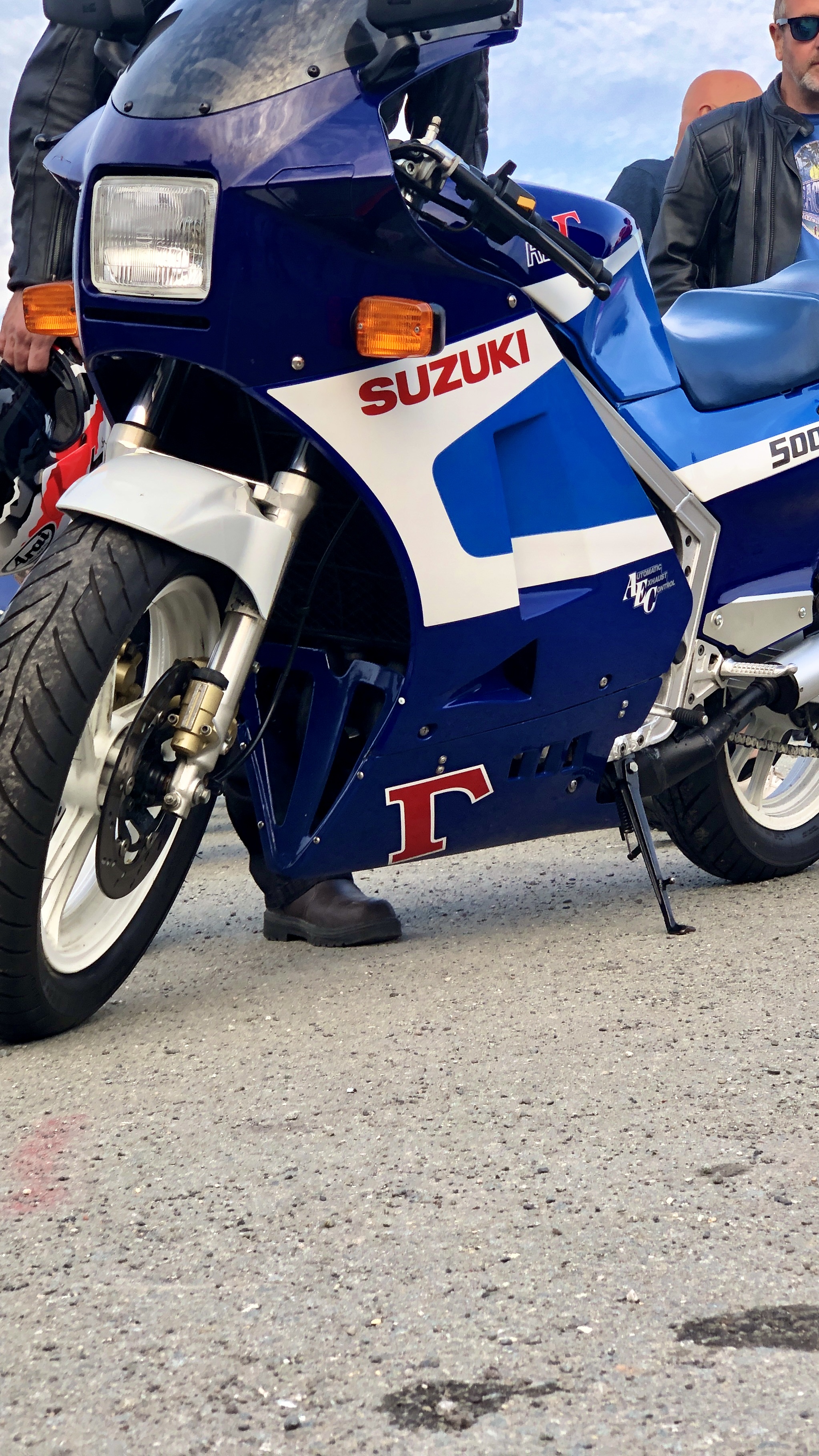
That nostalgia has helped create a growing collector market. Classic two-stroke models such as the Yamaha RD350LC, Suzuki RG500 Gamma and Honda NSR250 have all seen significant increases in value over the past decade. Well-maintained RD350LC examples in the UK commonly sell for around £8,000 to £12,000 depending on condition and originality, while rarer machines such as the RG500 Gamma have been known to exceed £20,000 when offered by specialist dealers or auction houses.


Even smaller capacity sports bikes from the 1990s, including 125cc and 250cc two-strokes, are increasingly sought after. It is now common to see restored or well-preserved examples appearing on platforms such as eBay or through classic motorcycle dealers for several thousand pounds.
A growing number of specialist websites and dealerships now focus specifically on classic Japanese performance bikes, reflecting the demand from enthusiasts keen to reconnect with the machines that defined their early riding years.
The One Modern Exception
If your pockets are deep enough, one British manufacturer has created a modern two-stoke example that keeps the concept alive. The Langen Two Stroke is produced by Langen Motorcycles, a small manufacturer based in Wigan.


Rather than aiming for mass production, the company focuses on building highly specialised motorcycles in very limited numbers.
At the heart of the machine is a 249.5cc liquid-cooled V-twin two-stroke engine capable of producing 76 horsepower. Modern electronic fuel injection and controlled oil injection are used to manage the engine more precisely than traditional carburetted designs.
Another striking feature is the bike’s extremely low weight. With a dry weight of around 120 kilograms, the motorcycle achieves a remarkable power-to-weight ratio.
The chassis uses an aluminium space frame and high-end components including Öhlins suspension and Brembo brakes. Each bike is assembled in small quantities and can be tailored to individual buyers.
Production numbers are intentionally limited, and prices sit in the region of thirty thousand pounds or more depending on specification.
Rather than attempting to reintroduce two-stroke motorcycles to the mass market, the Langen Two Stroke serves as a modern tribute to a style of motorcycle that once dominated racing and road riding alike.
Oh, and did I mention – it is beautiful too. I have seen it up close at a couple of motorbike shows, and while I have tried to capture it, my photos above really don’t do it justice. Langen’s strapline is “Exceptional British motorcycles fuelled by a passion to combine innovation with emotion.” This bike certainly lives up to that claim: it is innovative, and it will undoubtedly stir the emotions of anyone who still has a soft spot for a two-stroke.
Final Thoughts – A Lasting Legacy
The decline of the two-stroke motorcycle in the UK was the result of several factors working together. Environmental regulation, technological progress and shifting rider expectations all played a role in reshaping the industry.
While these engines are unlikely to ever return to widespread road use, their influence on motorcycling remains significant. Two-stroke machines powered countless racing victories and helped introduce many riders to the sport.
Although rare today, motorcycles such as the Langen Two Stroke demonstrate that the spirit of the two-stroke engine continues to inspire enthusiasts who appreciate its unique character.
Personally, I often find myself browsing the adverts and wondering whether I should buy another two-stroke. The temptation is always there. But I do sometimes question whether riding one again would really live up to those fond memories, or whether it is better to leave the nostalgia untouched and simply enjoy remembering the two-stroke bikes that defined my early riding years.


Leave a Reply