
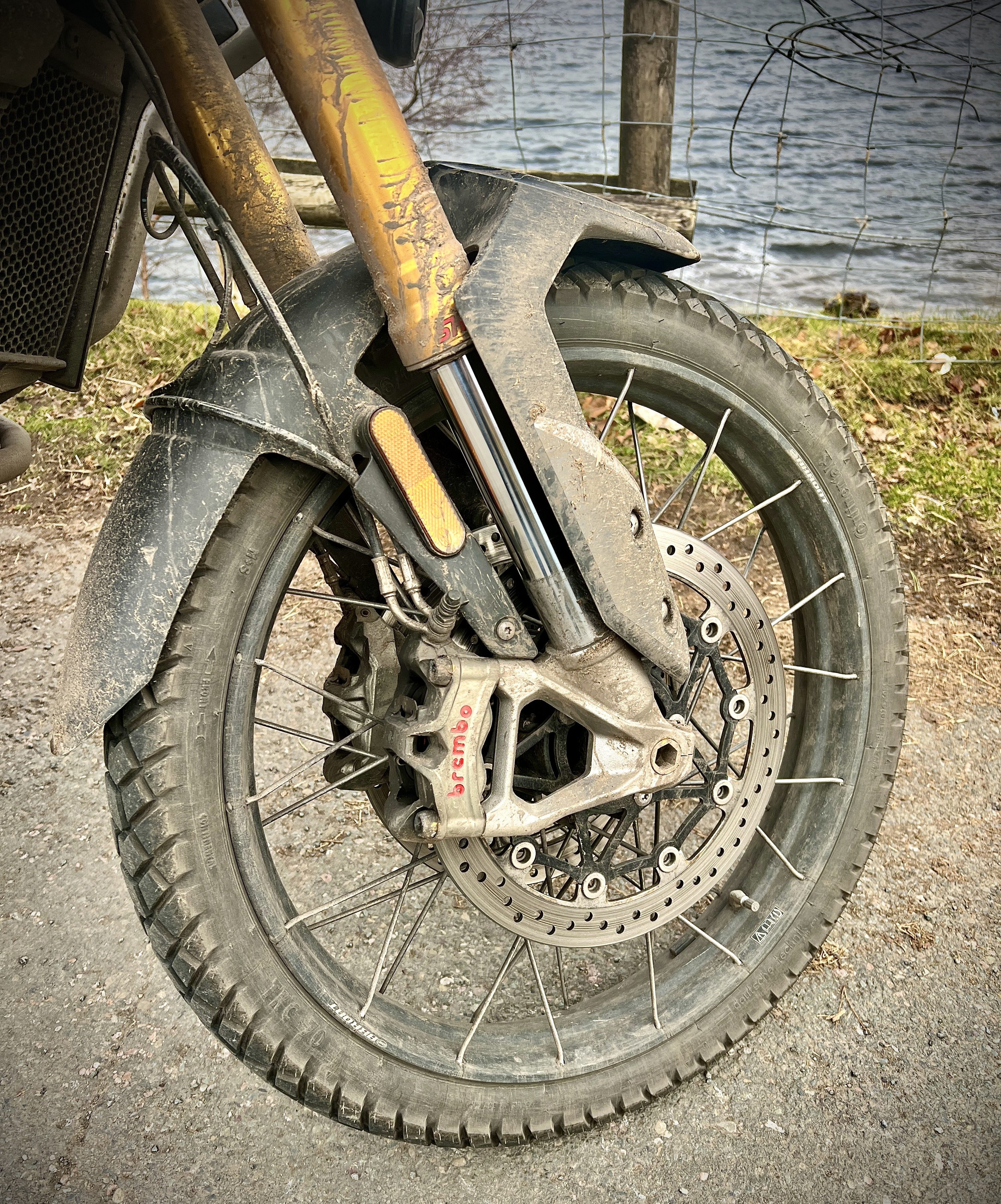
THE MOTORCYCLE FUNDAMENTALS SERIES – BY KILN MOTO
Motorcycle suspension plays a crucial role in the overall performance, comfort, and safety of a bike. While engines and styling often capture most of the attention, suspension is the system that determines how well a motorcycle handles real roads. Every time a rider accelerates, brakes, corners, or travels over uneven surfaces, the suspension is working to keep the tyres firmly in contact with the ground.
Understanding how suspension functions can help riders appreciate why it matters, recognise potential problems and make better decisions when maintaining or upgrading their motorcycles.
The Purpose of Motorcycle Suspension
The suspension system on a motorcycle performs several essential functions.
First, it absorbs shocks and unevenness from the road surface or trail. Unmade roads and trails are naturally more uneven; however, roads are rarely perfectly smooth. Across many parts of the UK, there are issues with the road surface, with riders regularly encounter potholes and stretches of poorly maintained tarmac. The suspension helps soften the impact of these imperfections. Without it, every bump and dip in the road or trail would be transmitted directly through the motorcycle’s frame and into the rider, making the journey uncomfortable and far more difficult to control.
Second, it maintains tyre contact with the road. When a motorcycle travels over rough surfaces, the suspension allows the wheels to move independently from the frame so that the tyres remain planted.
Third, it helps maintain stability. During braking, acceleration and cornering, the suspension manages weight transfer across the motorcycle. This stability is essential for predictable handling and rider control.
Together, these functions allow a motorcycle to remain comfortable, controllable, and safe across a wide range of road conditions.

Front Suspension: Motorcycle Forks
Most motorcycles use telescopic forks at the front. These are the two vertical tubes that connect the front wheel to the steering head of the frame. The design allows the wheel to move up and down while still providing accurate steering control.
Inside each fork is a combination of mechanical and hydraulic components. The primary parts include a spring, a chamber filled with fork oil, and internal damping mechanisms.
When the front wheel encounters a bump or dip in the road, the fork compresses upward. The spring absorbs much of the impact energy, preventing the force from transferring directly to the rider. At the same time, oil flowing through small passages inside the fork slows the movement. This process is known as damping.
Without damping, the spring would compress and rebound rapidly, causing the front end of the motorcycle to bounce repeatedly. The oil controls the speed of compression and extension so that the movement remains smooth and controlled.
There are two common fork configurations used on modern motorcycles, plus one not so common.
Conventional Forks
Conventional forks place the thinner stanchion tube at the top and the wider slider at the bottom. This design has been used for decades and remains common on commuter and older motorcycles.
Upside-down Forks
Upside-down forks, often called USD forks, reverse this arrangement. The larger tube is mounted at the top near the frame while the thinner section sits near the wheel. This increases rigidity and reduces flex under heavy braking or aggressive cornering. As a result, USD forks are widely used on sportier motorcycles and high-performance or expensive machines.
Telelever
The less commonly used Telelever front suspension system from BMW is used on a number of the brand’s motorcycles, particularly models in the GS and touring ranges such as the BMW R 1250 GS and earlier R-series machines. Unlike a conventional and USD front suspension setups detailed above that relies entirely on telescopic forks, the Telelever combines fork tubes with an additional structural component that manages suspension forces.
The system uses a centrally mounted spring and shock unit connected to an A-shaped control arm, often referred to as a wishbone. This arm links the front wheel assembly to the motorcycle’s frame. While the fork tubes remain visible and guide the front wheel for steering, most of the suspension forces are handled by the wishbone and the central shock absorber.
A key design goal of the Telelever system is to separate suspension movement from braking forces. In a traditional telescopic fork setup, braking loads compress the forks, causing the front of the motorcycle to dip forward – commonly known as brake dive. With the Telelever arrangement, much of this braking force is redirected through the wishbone and frame rather than compressing the suspension directly.
As a result, the front end experiences significantly reduced brake dive, which helps maintain more consistent chassis geometry during heavy braking. This can improve stability and rider confidence, particularly on large touring or adventure motorcycles. Many riders also find that the system provides a comfortable and controlled ride over long distances, although it delivers a different feel compared with conventional fork designs.

Left to right: CB750 (Conventional Forks) | Triumph Scrambler (USD Forks) | BMW GS (Centrally mounted shock absorber combined with A-arm wishbone linkages)
Rear Suspension: The Shock Absorber
The rear suspension usually consists of a shock absorber paired with a coil spring. On many modern motorcycles this takes the form of a single, centrally mounted unit known as a mono-shock, similar to the setup used on the BMW R nineT in the picture (Below left). However, some older motorcycles and certain modern classic models still use a twin-shock arrangement, with two separate shock absorbers mounted on either side of the rear wheel, as seen on bikes such as the Honda CB750 (Below right)


The basic principle for the rear shock is similar to the front forks. The coil spring supports the weight of the motorcycle and rider, while the hydraulic damping inside the shock absorber regulates the movement of the suspension.
When the rear wheel encounters a bump, the suspension compresses upward. The spring stores the energy generated by the impact, while oil flowing through internal valves controls how quickly the shock compresses and returns to its original position.
This controlled movement prevents the rear of the motorcycle from bouncing excessively and helps maintain traction with the road surface.
Many motorcycles also use a linkage system between the swingarm and the shock absorber. This arrangement changes the leverage on the shock as the suspension moves through its travel. The result is a progressive response that becomes firmer during large impacts while remaining comfortable over smaller bumps.
Compression and Rebound Damping
Two types of damping are important for suspension performance: compression damping and rebound damping.
Compression damping controls how quickly the suspension compresses when the wheel encounters a bump or when the rider applies the brakes. If compression damping is too soft, the motorcycle may dive excessively under braking or feel unstable when hitting bumps. If it is too firm, the suspension may feel harsh and fail to absorb road imperfections effectively.
Rebound damping controls how quickly the suspension extends after being compressed. If rebound is too fast, the suspension may extend too quickly and cause the motorcycle to feel bouncy. If it is too slow, the suspension may remain compressed for too long, reducing tyre contact and affecting grip.
A well-balanced suspension system carefully manages both compression and rebound so that the motorcycle responds smoothly and predictably.
Suspension Adjustments
Many motorcycles allow riders to adjust certain aspects of the suspension to better suit their weight, riding style, and typical riding conditions.
One common adjustment is preload. Preload changes the initial tension on the spring and helps set the correct ride height when the rider sits on the motorcycle. Proper preload ensures the suspension operates within its intended range of movement.
More advanced motorcycles may offer adjustable compression and rebound damping. These settings allow riders to fine-tune how the suspension reacts to bumps and how quickly it returns to position after compression.
Adjustments can also be helpful when carrying a passenger or luggage, as the additional weight alters how the suspension behaves.

Maintenance and Signs of Wear
Like any mechanical component, suspension systems require periodic maintenance. Fork oil gradually degrades over time and may need replacing according to the manufacturer’s service schedule. Seals can also wear, leading to oil leaks that reduce damping performance.
Common signs that suspension may need attention include excessive bouncing after bumps, instability when cornering, visible oil leaks from the fork seals, or a noticeably harsh ride.
Regular inspection and servicing help ensure the suspension continues to operate effectively and safely.
Final Thoughts
Motorcycle suspension is a sophisticated system designed to balance comfort, control, and safety. By absorbing bumps, maintaining tyre contact, and stabilising the motorcycle during dynamic movements, forks and shocks allow riders to maintain confidence in a wide range of riding conditions.
While it often operates unnoticed, suspension has a significant influence on how a motorcycle feels and performs. A well-maintained and properly adjusted suspension system can dramatically improve handling, stability, and overall riding enjoyment.
Disclaimer: The information provided in this article is for general informational purposes only. While every effort has been made to ensure accuracy, motorcycle models can vary, and manufacturer specifications may differ. Always refer to your motorcycle’s owner’s manual and follow the manufacturer’s recommended procedures and safety guidelines. The author and website assume no responsibility for any damage, injury, or loss resulting from following the guidance in this article.

Leave a Reply