
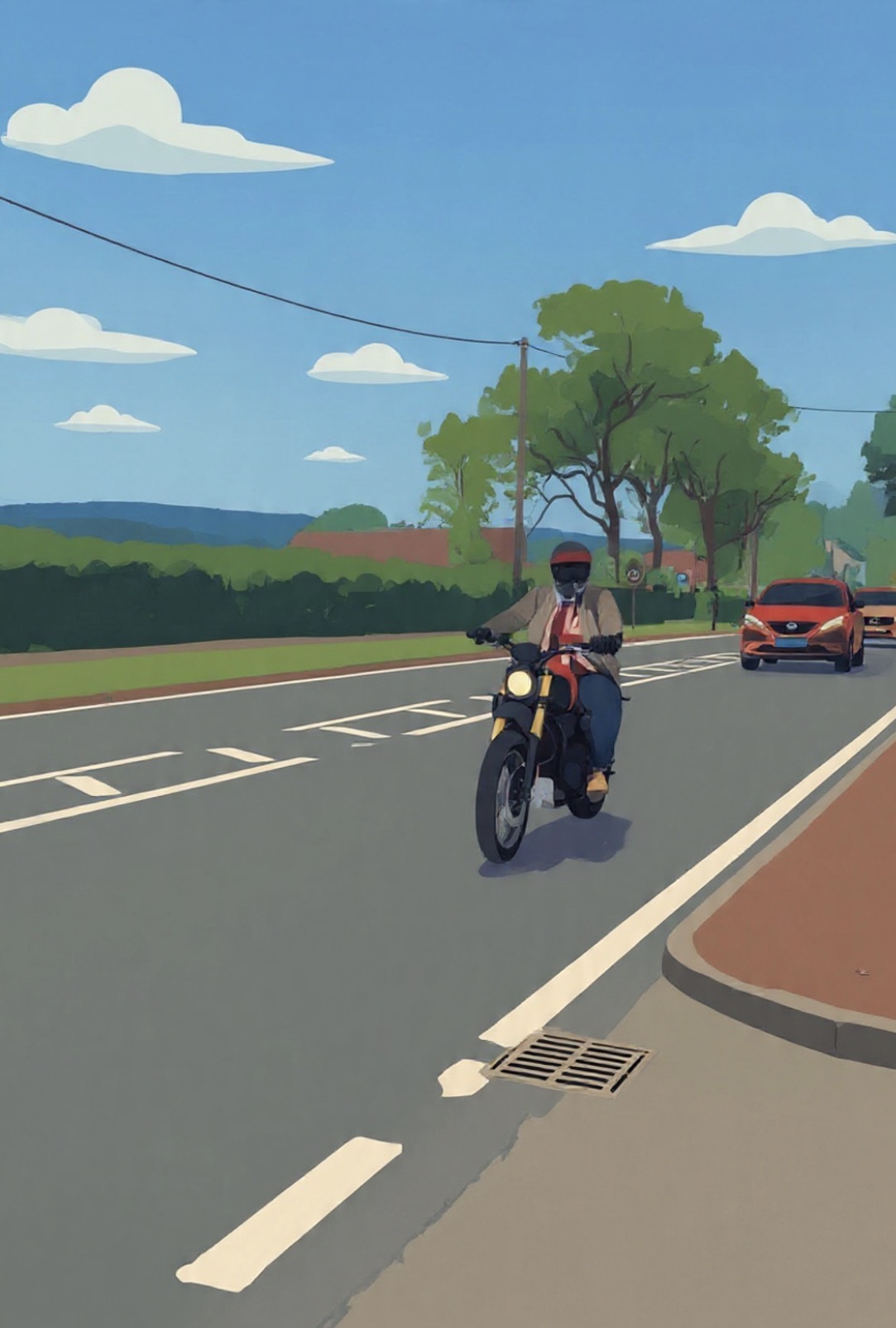
Road safety discussions often focus on technology, enforcement and infrastructure. All of these matter, but long-term change also depends on everyday behaviour. One of the simplest ideas gaining attention in recent years is a habit known as “Count the Bikes”. It encourages children and adults to actively notice motorcycles during ordinary journeys, helping build awareness long before someone learns to drive.
This idea has been promoted by Honda in collaboration with Bloodrun EVS, a blood bike charity established in Cleveland and North Yorkshire in 2010.

Counting bikes encourages children and adults to actively notice motorcycles.
Why Motorcycle Visibility Matters
Motorcyclists remain among the most vulnerable road users in the UK. Government road safety statistics consistently show that riders face a significantly higher risk of serious injury per mile travelled compared with car occupants. A major factor in many collisions is a driver failing to notice a motorcycle when pulling out, turning, or changing lanes.
Human attention is selective. Drivers tend to notice what they expect to see. Because motorcycles make up a smaller proportion of vehicles on the road, they can be overlooked even when they are clearly visible.
Developing the habit of actively scanning for motorcycles can help reduce this risk.
Turning Awareness Into a Simple Habit
The Count the Bikes idea is straightforward. During everyday journeys, families turn spotting motorcycles into a game:
- Count every motorcycle you see
- Keep a running total during the trip
- Encourage children to call them out first
The goal is not the number itself. The aim is to train the brain to expect motorcycles as part of normal traffic.
The Psychology Behind The Idea
Research into hazard perception and visual attention shows that people detect expected hazards more quickly than unexpected ones. This is why learner drivers practice hazard perception tests and why experienced drivers scan junctions instinctively.
Counting motorcycles strengthens this mental scanning process early in life. When a child repeatedly looks for bikes, their brain begins to treat them as a normal and expected part of the road environment. Years later, that expectation can carry into driving behaviour.
In practical terms, noticing a motorcycle even a fraction of a second earlier can give a driver more time to react.
Noticing motorcycles is particularly crucial when drivers are emerging from a junction.

Building Safer Drivers Before They Start Driving
Traditional driver education begins when someone is preparing for their test. By that stage, habits are forming quickly and attention is split between many new skills.
The Count the Bikes approach moves awareness much earlier:
- Childhood journeys build awareness
- Teenagers carry that awareness forward
- New drivers already expect motorcycles in traffic
This long-term approach focuses on prevention rather than correction.
How to try it yourself
You can start immediately on your next journey.
Ask children to watch for motorcycles while travelling. Get them to keep a tally during the trip. Notice how quickly spotting bikes becomes easier.
Many people say that once they start consciously looking for motorcycles, they suddenly seem to appear everywhere. It’s the same feeling you get when you’re considering buying a particular car and begin noticing that model far more often, simply because it is now on your mind.
Small change, lasting impact
Not every road safety improvement requires new legislation or complex technology. Some begin with simple behavioural shifts repeated daily.
Counting motorcycles during everyday journeys may seem like a small step, but it encourages awareness that can last a lifetime. Over time, this habit has the potential to influence how future drivers scan the road and react to hazards.
Often, the simplest ideas turn out to be the most effective when it comes to safety. As an added bonus, it can also help keep the children entertained on those long journeys together.

Leave a Reply