If you’ve ever studied an Ordnance Survey map and noticed green routes winding through the countryside, you’ve probably wondered where they lead. These are often unsurfaced public roads and tracks that motorcyclists call green lanes. Motorcycle green laning is one of the most rewarding ways to explore the British countryside, offering a blend of history, scenery, and slow-paced adventure.
Unlike motocross or off-road racing, green laning is about patience, skill, and rediscovering roads that have been used for centuries. In this post, I’ll share a little of my own experiences of riding green lanes, highlight the challenges of shared use, and offer a few tips for anyone wanting to explore UK trails and beyond.

Identifying Green Lanes
What makes these green lanes routes unique is that they are normally unsurfaced or partially surfaced, often with mud, rocks, or water crossings. The term green laning comes from riding these rural, often green and unsurfaced tracks, rather than from any single map symbol.
From a legal standpoint it can be tricky – Green lanes are often shown on OS Maps as Byways Open to All Traffic (BOAT) or Unsealed Unclassified Roads (UUR), but it’s important to do your research and verify which of these tracks, trails, and roads you can legally ride before setting out. One way of doing this is to tap into the likes of the Trail Riders Fellowship who have created a Green Road Map. As per their website – the TRF advocate for the right of all individuals to responsibly enjoy and explore the Green Road Network, by fostering a culture of tolerance and respect among all users.
The Trail Riders Fellowship (TRF) has been active since the 1970s, working to protect and maintain access to unsurfaced roads for motorcyclists by researching historic rights of way, challenging lane closures, liaising with local authorities, and promoting responsible riding. Thanks to organisations like the TRF, many green lanes remain accessible and preserved, despite threats from neglect, legal restrictions, or misuse.
Sharing The Green Lanes
One thing that is important to keep in mind is that green lanes are shared spaces. Walkers, horse riders, cyclists, farmers, and vehicles may all have legal access depending on the classification. Motorcyclists often get the most criticism due to noise, visibility, or careless riding. Responsible riders follow simple etiquette. Slow down near walkers and horses, stop and switch off the engine when needed, pass at walking pace when appropriate, and be courteous and friendly. Observing this etiquette maintains goodwill and ensures access is preserved for everyone.
Many people assume motorcycles damage green lanes. In reality, the impact comes from multiple sources, including weather, water erosion, agricultural vehicles, horses, and general use. Good behaviour and respectful riding help combat negative perceptions and prevent potential restrictions.
What About Further Afield
The UK has some fantastic green lanes, but you may also be tempted to explore trails that are further afield. If you’re ready to push your adventures outside of the UK, the Trans European Trail (TET) offers an exciting opportunity. This volunteer-maintained network of off-road routes spans Europe, linking legal trails and green lanes across multiple countries. So the skills you build riding local BOATs in the UK can become valuable preparation for longer, cross-border adventures abroad.
Peaky Blinders
Regular readers of my blogs will know that the Peak District is on my doorstep and is one of England’s best areas for green laning. Its moorlands, valleys, stone walled trails, and historic routes provide a variety of riding challenges. One of my favourites is Three Shires Head, where Derbyshire, Staffordshire, and Cheshire meet. A trail leads to this historic packhorse bridge, which crosses a stream at the heart of where the three counties converge. The narrow, rocky lanes leading there demand careful riding, but arriving at such a picturesque location makes every muddy and rocky section worthwhile.
Choosing Your Perfect Green Laning Bike
Choosing the right green laning bike is about balancing capability, confidence, and practicality. Lightweight dual-sport and trail bikes are often ideal, as they’re easier to handle on muddy tracks, rutted lanes, and tight sections while still being comfortable enough for road miles between trails. Consider seat height, weight, fuel range, and how easy the bike is to pick up after a spill. Ultimately, the best bike is one that matches your experience level, feels manageable in challenging terrain, and encourages you to ride further and more often.
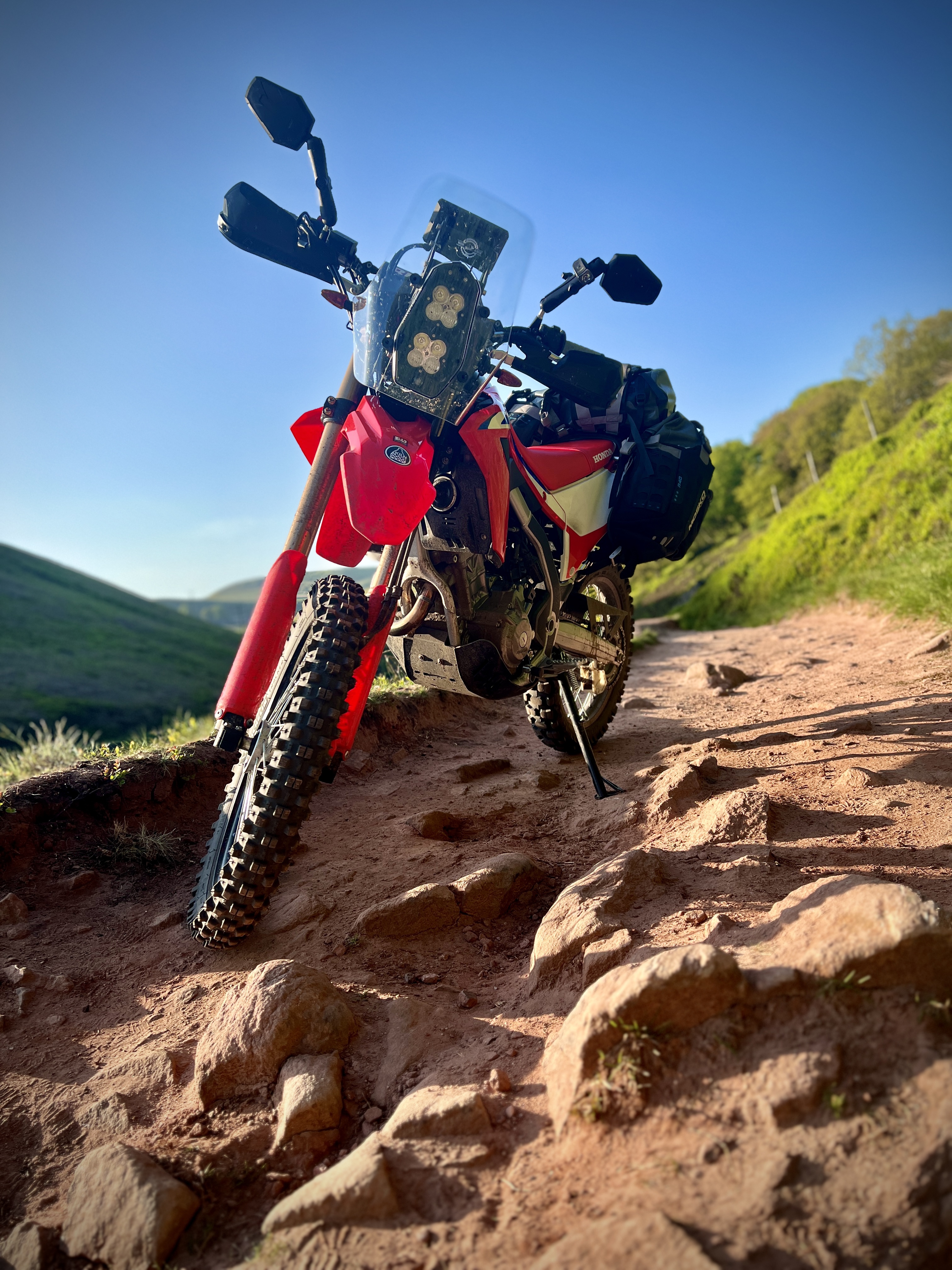
My first green laning bike was a Honda CRF250L, and it ticks all the right boxes for the job. It’s light, forgiving, and easy to handle, with manageable power for tricky terrain and a weight that makes picking it up after a drop far less daunting. It encourages good habits like riding on the pegs and choosing your lines carefully, helping to build confidence. Overall, the CRF250L is a great choice for both beginners and more experienced riders.

I later upgraded to the Honda CRF300L, which offers a little more torque and, on my bike, improved handling thanks to upgraded Rally Raid suspension. It provides greater control on technical green lane sections while still keeping the friendly, approachable feel of the 250L, making it a refined and updated package for trail riding.

Final Thoughts
Green laning is all about slow, deliberate progress and exploration. Each ride becomes a mini-adventure, uncovering hidden corners of the countryside many of which remain invisible from main roads. By the end of the day, a muddy bike and boots, a tired body, and a satisfied smile are all part of the experience. It is a unique aspect of UK motorcycling, combining history, adventure, and a deep respect for the countryside. Riding these trails teaches patience, courtesy, and the thrill of discovery on two wheels.
The UK green laning community is friendly, inclusive, and driven by a shared passion for exploration rather than competition. Many riders share their adventures on YouTube, offering trail tips, route recommendations, personal stories, and plenty of entertaining mishaps. These videos provide practical guidance for tackling challenging terrain and choosing the right bike, while also fostering a sense of community among riders. Watching others navigate rocky trails, muddy ruts, river crossings, or historic byways inspires newcomers and keeps experienced riders engaged, helping to sustain the hobby and promote responsible, respectful riding.
Disclaimer – This blog references green lanes as roads, tracks, trails, and rights of way – this information is provided for general reference only. The legal status of any route may change over time and may not be clearly marked. Users are responsible for determining the lawful use of any route they travel and should consult the relevant local authority for the most current information.

Leave a Reply