
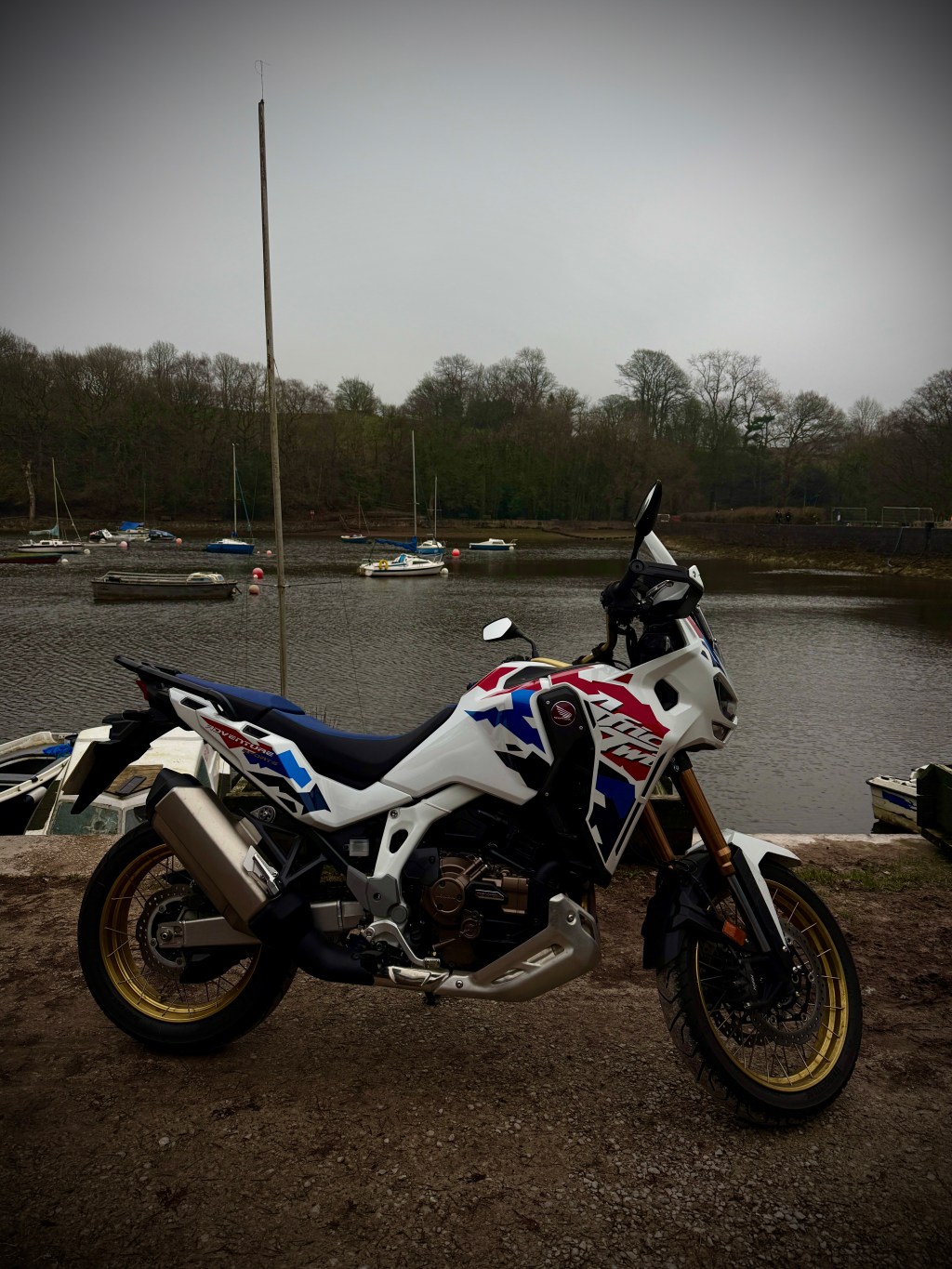
I’ll be honest – before riding the Honda Africa Twin Adventure Sports DCT, I didn’t think an automatic adventure bike was something I’d ever consider owning. No clutch lever, no gear shifter, and a reputation for being more road-focused than the Africa Twins of old. It sounded interesting, but not necessarily for me.
After spending time riding it, my opinion changed – and fairly quickly.
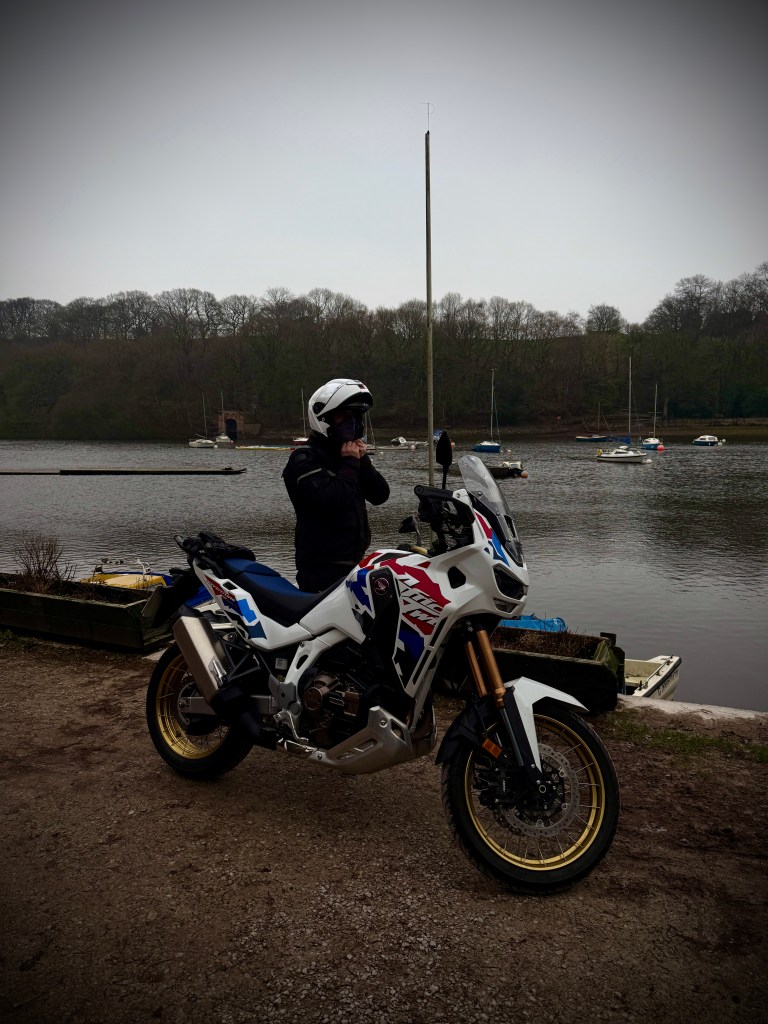
First Impressions: Riding Without a Clutch
The most noticeable difference from the moment you set off is the lack of a clutch lever and gear-shift pedal. Pulling away feels strange at first. Years of muscle memory don’t disappear overnight, and for the first few miles my left hand and foot kept expecting something to do, but you eventually get past that.
Honda’s Dual Clutch Transmission (DCT) feels remarkably natural once you relax into it. The bike pulls away smoothly, shifts gears without fuss, and reacts well to throttle input. When riding normally, it just works in the background, letting you focus entirely on the road. Within a short time, I stopped thinking about the gearbox altogether — which is probably the best compliment you can give it.
I went into this ride convinced that automatic bikes weren’t for me. By the end of it, I wasn’t so sure.
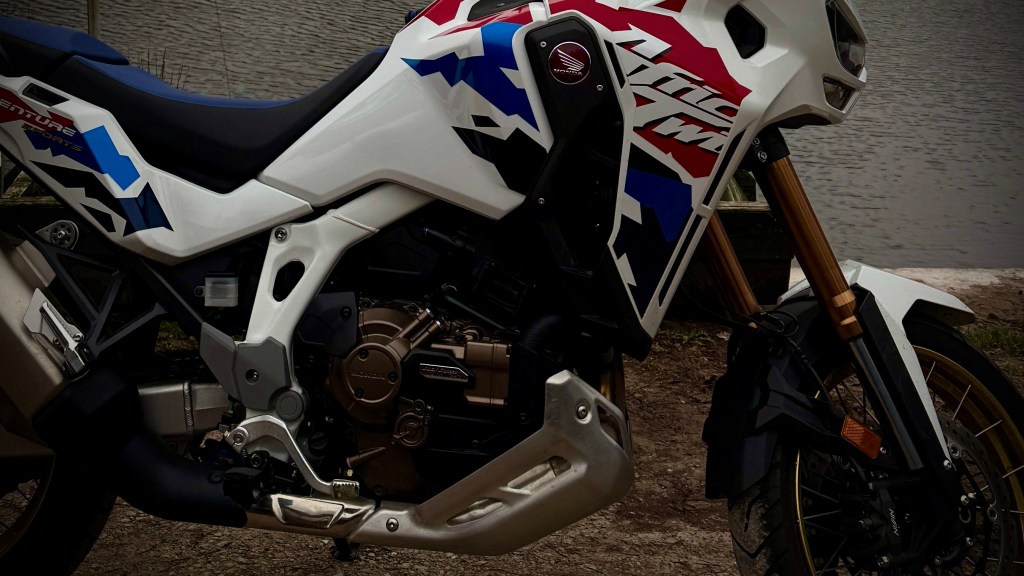
A More Road-Biased Africa Twin
Another key difference with the Africa Twin Adventure Sports is the 19-inch front wheel. I’m used to 21-inch front wheels on my adventure bikes, especially those aimed at mixed or off-road riding, so this immediately hinted at a more road-focused setup.
On tarmac, the benefits are obvious. The bike feels stable, planted, and confidence-inspiring when cornering. Turn-in is smooth and predictable, and the front end provides good feedback, even when riding at a brisk pace. It encourages you to enjoy twisty roads rather than simply sit back and cruise.
Despite this road bias, the riding position remains very much adventure-focused. The upright stance, comfortable seat, and well-positioned handlebars suggest a bike that is capable of much more than just time spent solely on the tarmac.
I had the Africa Twin in Sport mode rather than the standard Drive setting – specifically Sport level 2. This gave the bike a noticeably sharper, more responsive feel without making it over-revvy or twitchy. Essentially, this setting quickens the gear changes so they feel closer to the natural shift intervals you’d expect on a manual bike.
Electronic Suspension That Makes a Difference
The electronically controlled suspension is one of the standout features of this bike. Rather than feeling like a gimmick, it genuinely improves the riding experience.
I spent most of the ride in the medium suspension setting, which felt spot on for real-world roads. It soaked up rough surfaces comfortably while keeping the bike controlled through bends.
What impressed me most was how adaptable it felt. The suspension adjusted to changing conditions smoothly, without needing constant manual input, which is exactly what you want on a long-distance adventure bike.
Looks Can Be Deceiving
At first glance, the Africa Twin Adventure Sports looks like a lot of motorcycle. It’s tall, wide, and has real presence, which initially made me think it might feel top-heavy or awkward at low speeds. In reality, it was quite the opposite. The weight feels like it is carried low down, and once moving, the bike felt far lighter than its size suggests. If I hadn’t known better, I’d have guessed I was riding something closer to a 600 than an 1100. I fully expected the tall stance to translate into sluggish or vague handling, but it never did. Instead, the bike felt balanced, confidence-inspiring, and surprisingly agile, even when changing direction quickly. It was one of the biggest and most pleasant surprises of the ride.
Real-World Riding Experience
On the road, the Africa Twin Adventure Sports feels serious, refined, and capable. The engine delivers strong, usable torque that suits everyday riding rather than chasing headline figures, the standard exhaust note is surprisingly enjoyable too. Combined with the DCT and electronic suspension it makes progress effortless, especially in traffic or during longer journeys.
The bike feels stable at speed, relaxed on motorways, and confident on back roads. Features like cruise control and multiple riding modes add to its touring ability without overcomplicating the riding experience.
It’s a bike that feels easy to live with – and that matters just as much as outright performance.
The Things I Didn’t Like
No bike is perfect, and the Africa Twin Adventure Sports is no exception. My main frustration was the switchgear. It feels overly busy, with so many buttons that it’s easy to hit the wrong one by mistake. More than once, using the indicators felt like a game of chance, with the horn close enough to be triggered accidentally – which is hardly ideal when you’re about to overtake. It’s the sort of layout you’d likely adapt to over time, but it’s far from intuitive at first.
The adjustable screen was another disappointment. I’m used to being able to tweak the screen height on the move, something I’ve done regularly on my Triumph Tigers. On the Africa Twin, adjusting the screen means pulling over, using both hands, and taking a moment out of the ride. The screen works well once set, but having to stop to make what should be a simple adjustment felt unnecessarily awkward and, frankly, a bit annoying.
That said, none of these issues felt like deal-breakers.
Final Thoughts: Would I Buy One?
I started this test ride sceptical, especially about the automatic gearbox. I finished it genuinely impressed.
The lack of a clutch quickly stops feeling like a compromise and starts to feel like an advantage. The 19-inch front wheel improves road handling, and the electronic suspension adds real value rather than unnecessary complexity.
The Honda Africa Twin Adventure Sports with DCT and ES isn’t trying to be everything to everyone. It’s clearly aimed at adventure bike riders who spend more time on the road than off it. This bike had the comfort, presence, and versatility you expect from an adventure bike and I’m sure with the right tyres, most riders could handle gravel tracks and light off-road without too much trouble – rumour has it that those riders who are a little braver off-road, use the hand brake to skid the rear wheel.
I never thought I’d seriously consider owning an automatic motorcycle – but this bike has opened my eyes. Enough that I may just end up buying one….watch this space!


 KILN MOTO
Leave a reply to Simon Cancel reply