The words modified and custom get thrown around a lot in the motorbike world. I’ve probably used them interchangeably myself over the years. But once you’ve actually built a bike, spanners in hand, you start to realise there’s a clear difference between the two – and it’s not just about how good the finished bike looks.
The CB750 café racer I built lives right in that grey area, which makes it a useful way to explore the gap between modified bikes and full custom builds.

What Most People Mean by “Custom”
For many riders, custom simply means “not standard”. An aftermarket exhaust, different bars, a new seat and suddenly the bike is described as a custom build. There’s nothing wrong with that way of speaking, but it blurs an important distinction.
To most builders, a true custom bike involves more than swapping parts. It means fabrication, problem-solving and committing to changes that can’t easily be undone. Once you start cutting frames, making parts from scratch or redesigning how the bike is laid out, you’re into proper custom territory.
The Reality of My CB750 Build
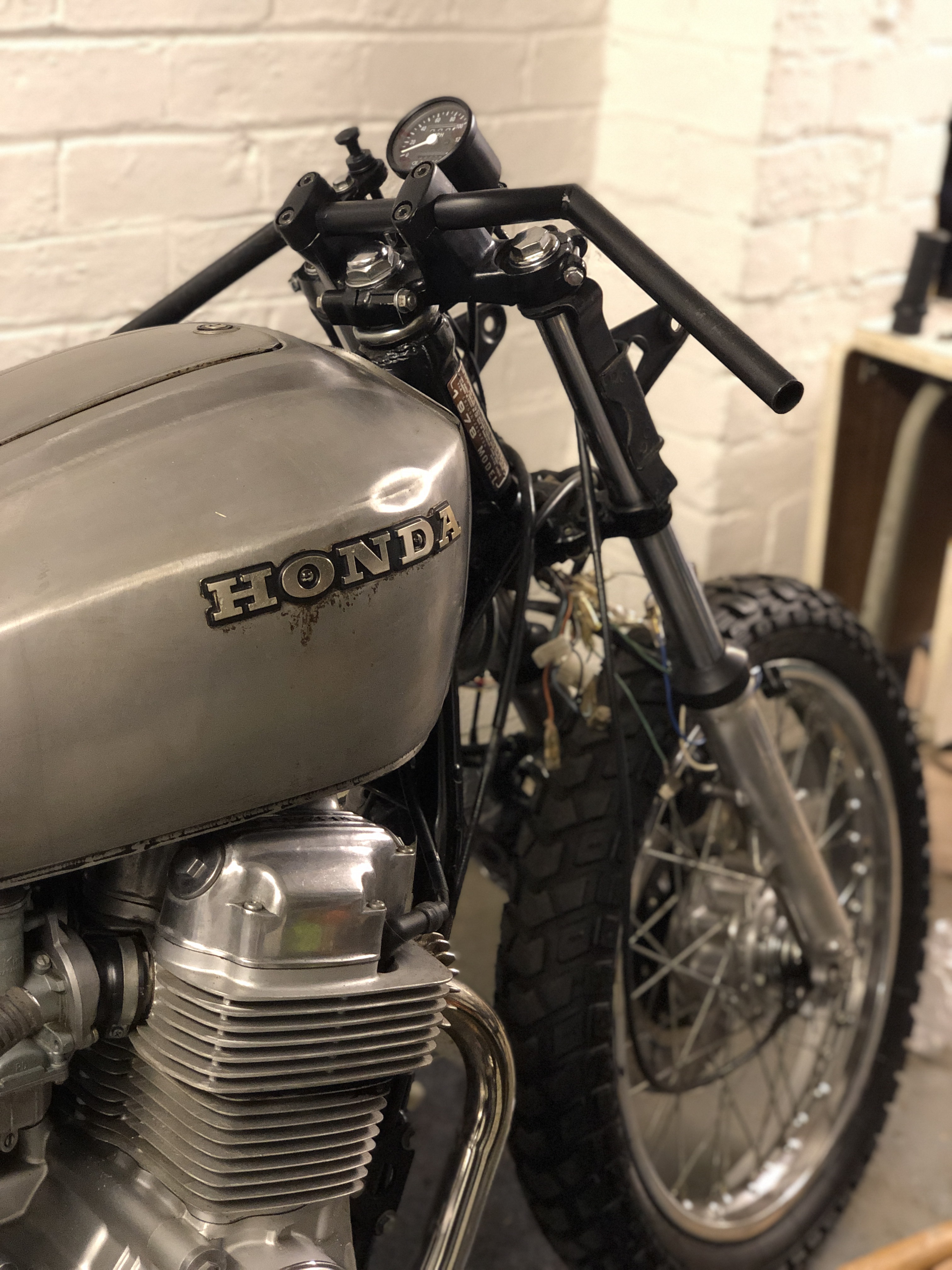
When I look honestly at my CB750, it sits much closer to modified than custom. The bike started life as a standard 1978 CB750 K8, and for the most part it still is. The majority of the work involved carefully choosing aftermarket parts that suited the café racer look and feel I was going for, then fitting them cleanly and correctly.
Bars, exhaust, suspension, oil tank, rear-sets, lighting – all bolt-on parts. Some took more fettling than others, but none of them fundamentally changed the bike’s structure or engineering. If I wanted to, I could return most of it to standard with time, patience and a box of original parts.
The One Proper Custom Moment
There is one exception, and it’s the point where the project crossed briefly into custom territory.
I cut the rear section of the frame to shorten the seat and have that café racer seat loop. That decision changed the bike permanently. Once the grinder comes out and metal is removed, there’s no pretending it’s just a bolt-on modification. It altered the proportions of the bike, and dictated what would and wouldn’t work visually from that point on.
That single cut probably had more impact on the bike’s character than any other part I fitted. But even then, it was a relatively contained piece of fabrication rather than a full frame redesign or ground-up rebuild – It was a bit of cutting and welding really.
Why I Still Call It a Modified Bike
Despite that frame work, I’m comfortable calling the CB750 a modified bike rather than a full custom. The original geometry, engine, layout and identity are all still there. You can still pretty much tell what it is at a glance.
And that’s not a criticism of the build – it’s just an honest description of what it is. The aim was never to create a one-off show bike or a radical reimagining. It was about envisioning what Honda got right in the first place and simply shaping the bike to suit how I ride and what I like looking at in the garage. Those with keen eyes will notice little changes like the large K8 tank being replaced with the more slender 1977 Super Sport tank.


Why the Distinction Matters
Being clear about whether a bike is modified or custom isn’t about bragging rights. It’s about setting realistic expectations.
Modified bikes are often more usable, easier to maintain and simpler to insure. Custom bikes demand more commitment, more skill and often more compromise. Both approaches are valid, but they’re different paths.
Calling every bike with aftermarket parts a custom build does a disservice to the builders who are genuinely fabricating frames, making tanks from scratch and solving problems without a catalogue of aftermarket parts to lean on.
Final Thoughts
My CB750 sits in that honest middle ground. Mostly modified, lightly customised, built with intention rather than hype.
And that’s fine by me.
Not every project needs to be a full custom to be worth doing. Sometimes the best builds are the ones that respect the original bike, make thoughtful changes, and end up being ridden rather than just talked about.
If you’re building something similar, don’t worry too much about the label. Focus on doing the work properly, understanding what you’re changing, and enjoying the process. That’s what really matters in the end.


Leave a Reply