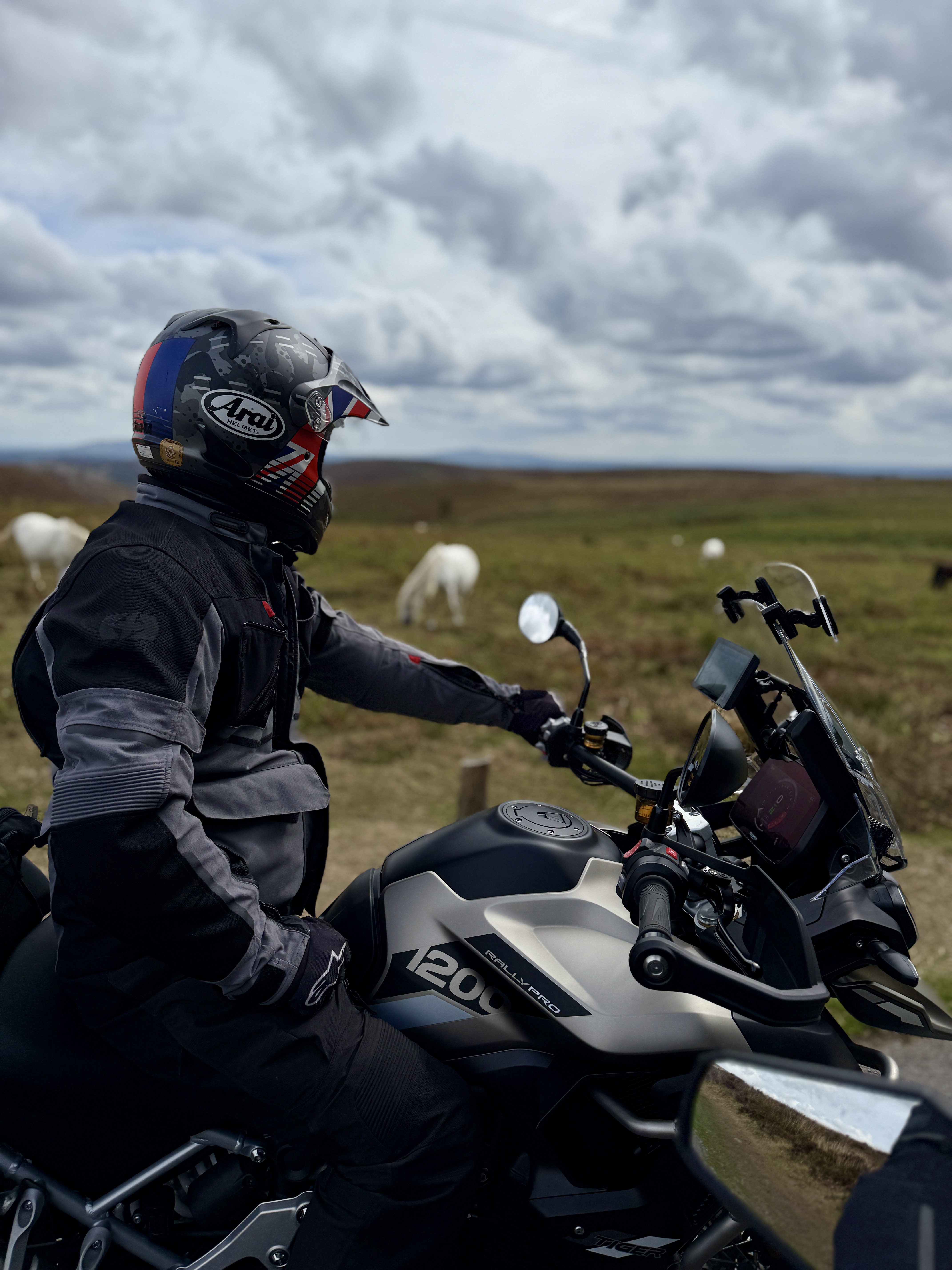
Adventure bikes have become the default choice for many touring riders. They look capable, feel reassuring and promise the freedom to ride anywhere. That promise is what drew me to the Triumph Tiger range, first with the 900 and now the Tiger 1200 Rally Pro.
I enjoy the bike and we get on well. But lately I’ve been questioning whether an adventure bike is actually the best fit for the way I tour, or whether a lighter sports tourer, such as the Yamaha Tracer 7 GT, would make more sense for real-world riding.
How I Actually Tour on a Motorcycle
Most motorcycle touring, particularly trips abroad, follows a familiar pattern. Long days on well-surfaced roads, mountain passes, flowing B-roads and motorways linking everything together. The overwhelming majority of miles are covered on tarmac.
Off-road riding, in the true sense of the word, is rare. At most, it tends to be short gravel sections, rough access roads or the odd poorly maintained lane. Those moments make up a tiny fraction of the overall distance, yet they often influence the type of bike we choose.
That’s where the question starts to form: if most touring is done on roads, how much off-road ability do you actually need?
Living With a Large Adventure Bike
There’s no denying the strengths of a big adventure bike. Once moving, the Tiger 1200 is comfortable, stable and confidence-inspiring. The riding position suits long days and the bike handles distance with ease.
I’m also not the tallest rider, which adds another layer to the reality of living with a large adventure bike on tour. The tall seat height can make slow-speed situations more demanding, particularly when the bike is fully loaded with luggage. Stopping on uneven ground, manoeuvring in tight spaces or simply putting a foot down with confidence requires more thought and care. It’s manageable, but it does add a small, constant challenge that becomes more noticeable over the course of a long trip.
In the right hands, the Tiger 1200 Rally Pro is unquestionably capable off-road. It’s a bike designed to cope with terrain far rougher than most touring riders will ever attempt, and its engineering reflects that ambition. The issue, for me, isn’t what the bike can do, but what I actually ask it to do. Over time, that gap has become harder to ignore. I’ve started to question whether I’m carrying around a significant amount of off-road capability that rarely gets used, and whether that unused potential is coming at the cost of weight, size and effort in the touring I do most often.

Why a Sports Tourer Starts to Look Appealing
Sports tourers are designed with road riding as the priority. They tend to be lighter, lower and easier to manage while still offering comfort, weather protection and luggage options for longer trips.
A bike like the Tracer 7 GT appeals because it focuses on where most touring actually happens. Less weight usually means less fatigue, easier handling and more enjoyment on twisty roads. Those benefits are felt every single day you ride.
While a sports tourer isn’t intended for serious off-road riding, light gravel or poor surfaces can usually be handled without drama if approached sensibly. For many riders, that level of versatility is more than enough.

Adventure Bike vs Sports Tourer: A Practical Comparison
When you strip away the marketing and look at how these bikes are used in real touring situations, the differences become clearer.
| FEATURE | ADVENTURE BIKE (ADV) | SPORTS TOURER |
|---|---|---|
| Primary Purpose | Designed for mixed surfaces and varied terrain | Designed mainly for road-based touring |
| Overall Weight | Heavier, especially when loaded | Lighter and easier to handle |
| Seat Height | Tall and commanding | Lower and more accessible |
| Suspension Style | Long travel for rough surfaces | Firmer, road-focused setup |
| Road Handling | Stable but can feel bulky | Agile and confidence-inspiring |
| Low-Speed Control | Requires more effort | Easier in towns and car parks |
| Comfort on Long Days | Very comfortable once moving | Comfortable with less physical effort |
| Wind Protection | Excellent | Good and often more streamlined |
| Luggage Carrying | Designed for heavy loads | Well-suited to touring luggage |
| Off-Road Ability | Clear strength | Limited but potentially capable on light gravel |
| Fuel Efficiency | Generally lower | Usually better |
| Best Suited To | Riders who regularly leave the tarmac | Riders who tour mainly on roads |
| Main Compromise | Size and weight for unused capability | Reduced confidence on rough terrain |
Is Bigger Always Better?
Moving from the Tiger 900 to the 1200 made this question harder to ignore. Bigger brings more power, more presence and more technology, but it also brings more mass. At some point, extra capability stops improving the riding experience and starts becoming excess.
The Tiger 1200 Rally Pro is an excellent motorcycle. There’s no doubt about that. But excellence doesn’t automatically mean it’s the right tool for every rider or every type of trip.


Final Thoughts – Choosing the Right Touring Bike for You
This isn’t about arguing that one type of bike is inherently better than another. It’s about being honest with yourself about how you actually ride. If your touring regularly takes you onto rough tracks, unsealed roads, or genuinely unpredictable terrain, an adventure bike more than earns its keep.
That said, it also opens up another question: whether a lighter adventure bike might make more sense than automatically opting for the biggest one available – a topic I explored in a previous post about finding the right size adventure bike.
In my case, I’m lucky to have a lightweight dual-sport too – in the CRF300L – so most of my off-road riding happens on that bike. That means the bulk of my touring miles are on paved roads, with only the occasional stretch of poor surface to deal with. Viewed through that lens, a sports tourer starts to feel like the more logical and potentially, a more enjoyable choice for touring than the Tiger 1200.

I’m not rushing into a decision. The Rally Pro and I have history, and that familiarity matters. But the idea of a lighter, more manageable bike that suits the reality of my touring is becoming harder to ignore.
Maybe the best touring bike isn’t the one that can go anywhere. It’s the one that fits where you actually go.


Leave a Reply to SimonCancel reply