
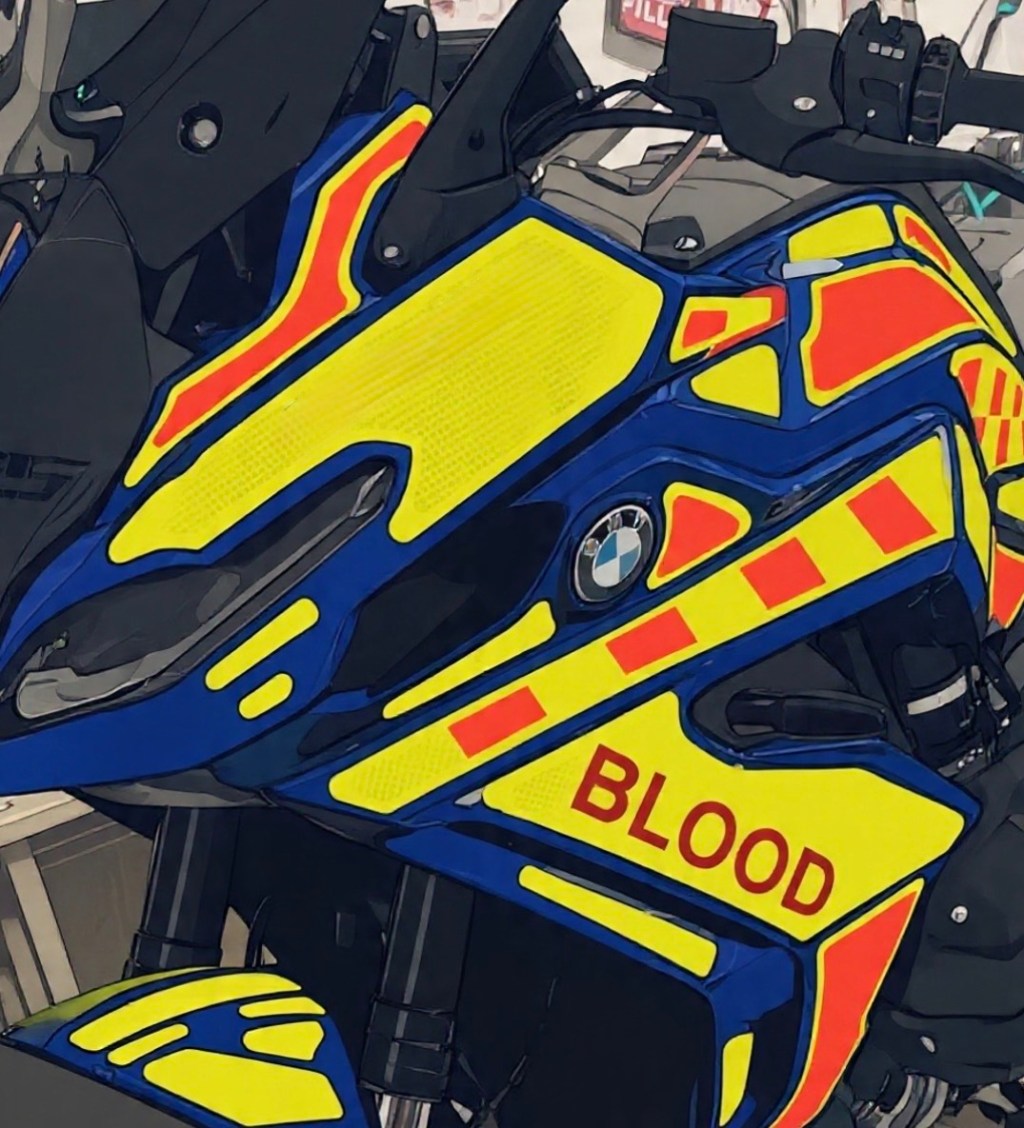
After completing the advanced riding element of my training, the next stage in my Blood Bike journey moved firmly into the real world. This part of the training process was the practical induction and a short first shadow ride.
The evening began at the bike storage location, which in my case is a local fire station. Sharing a location with emergency services immediately felt fitting. The unit houses both Blood Bikes and a Blood Car, all managed and maintained by volunteers. The space was organised and efficient, clearly designed to make it easy for riders to prepare quickly and head out when a job comes in.
I was joined by another new inductee who was just starting their journey too, which made the experience feel even more meaningful. We were both at the same starting point, learning together and beginning to understand what the role really involves.
Our induction was led by Paul, an experienced Blood Biker with seven years in the role, who also looks after the bikes and the storage facility. It was reassuring to learn from someone with so much practical experience.
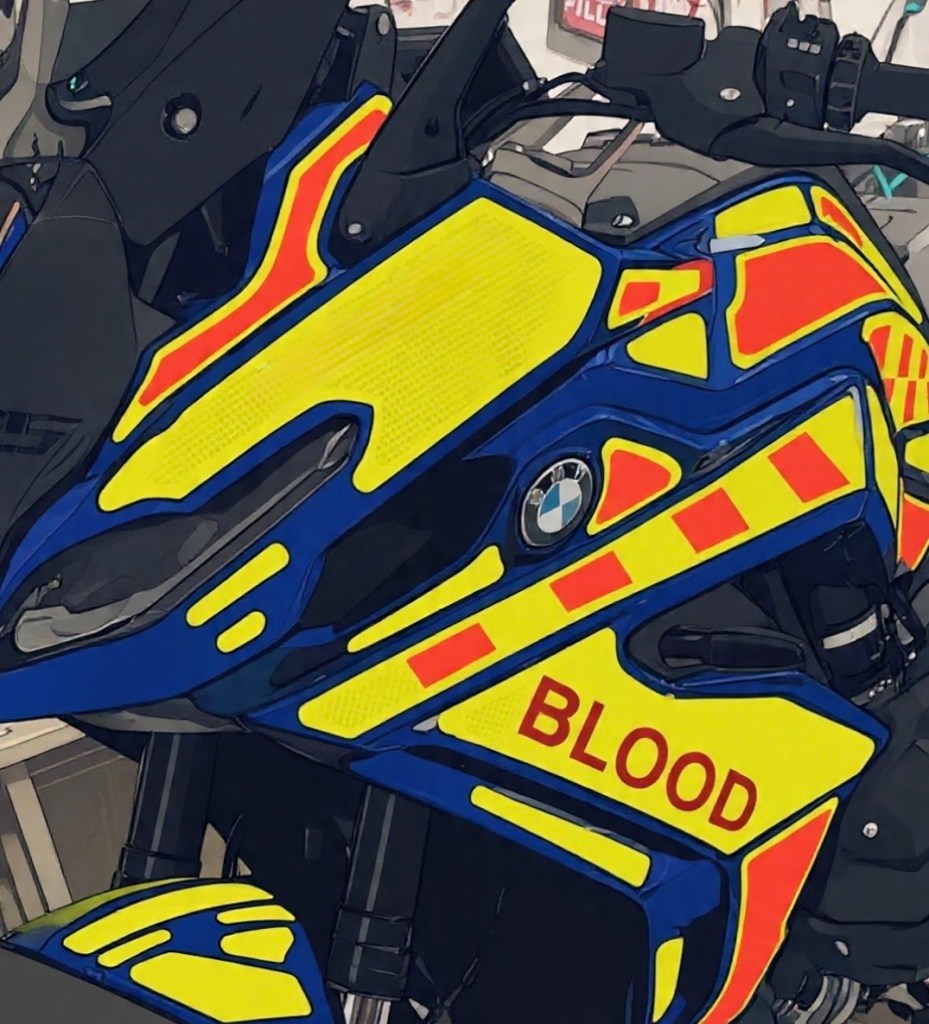
We were introduced to the vehicles used on shifts. These included two BMW motorcycles, an RT and an RS, as well as the Blood Car, in this case a little Dacia. One of the key messages from the evening was that being a Blood Biker is not just about riding. The responsibility begins before the engine is even started.
Before every shift, riders must carry out a full set of safety checks using the POWDERY system. These checks are logged digitally to create a clear record. Everything from tyres and lights to fuel and general condition is checked, along with the specialist transport equipment carried on the bikes. It really highlighted the level of trust placed in volunteers to ensure the vehicle is safe and ready before accepting a call.
After completing the checks, we headed out to shadow Paul on his first jobs of the night. We followed on our own bikes as he travelled to collect samples from a smaller local hospital.
Throughout the evening, Paul remained in regular contact with his controller, providing updates on his location, the task in hand and estimated arrival times. The blood bikes are tracked, but these regular updates are an important part of maintaining visibility and ensuring rider safety. It also helps the controller coordinate the wider operation effectively.
Once the samples had been collected, we followed the journey to the pathology lab at the main hospital for drop off. While we were there, we were shown the various locations we may need to visit during future shifts. Seeing the entrances, departments and procedures in person made the process feel much more familiar and less daunting.
I thoroughly enjoyed the evening and it was great to see a Blood Biker in action for the first time. One thing that really stood out was the way people reacted to the volunteers. Everywhere we went there was genuine gratitude and appreciation. It was a powerful reminder that although the work often happens behind the scenes, it makes a real difference.
We finished the induction over a coffee, discussing the key points from the evening, asking questions and reflecting on how much we had learned in just a few hours. Paul made sure we had covered everything before signing off the induction checklist so it could be passed on to the relevant members of the Blood Bike team.
This practical induction is another important step towards becoming operational. The next stage of training is the blood handling course. The journey continues.

 KILN MOTO
Leave a comment