
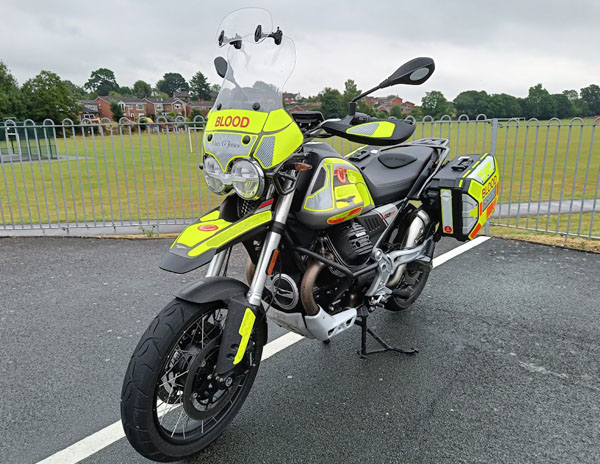
I’m delighted to share that I’ve passed my riding evaluation to become a Blood Bike rider.
For anyone unfamiliar with the role, Blood Bike charities are volunteer organisations that provide a professional medical courier service to the NHS, completely free of charge. Across the UK, volunteers transport blood and blood products, pathology samples, surgical items, patient records, medication, donated breast milk and other urgent clinical supplies between hospitals and healthcare facilities – a service that plays a small but vital part in saving lives.
This marks the beginning of an exciting and meaningful volunteering journey. Passing the assessment is just the first step, and I’m looking forward to the training and experiences ahead as I work towards becoming an active member of my local Blood Bike Charity – Shropshire, Staffordshire, Cheshire Blood Bikes (SSCBB).
At the time of writing, SSCBB currently operate 18 liveried blood bikes, strategically based in secure locations across the three counties. Within their fleet are a range of motorbikes including:
- BMW 1250 RS & RT
- BMW 1300 RS & RT
- Moto Guzzi V85TT

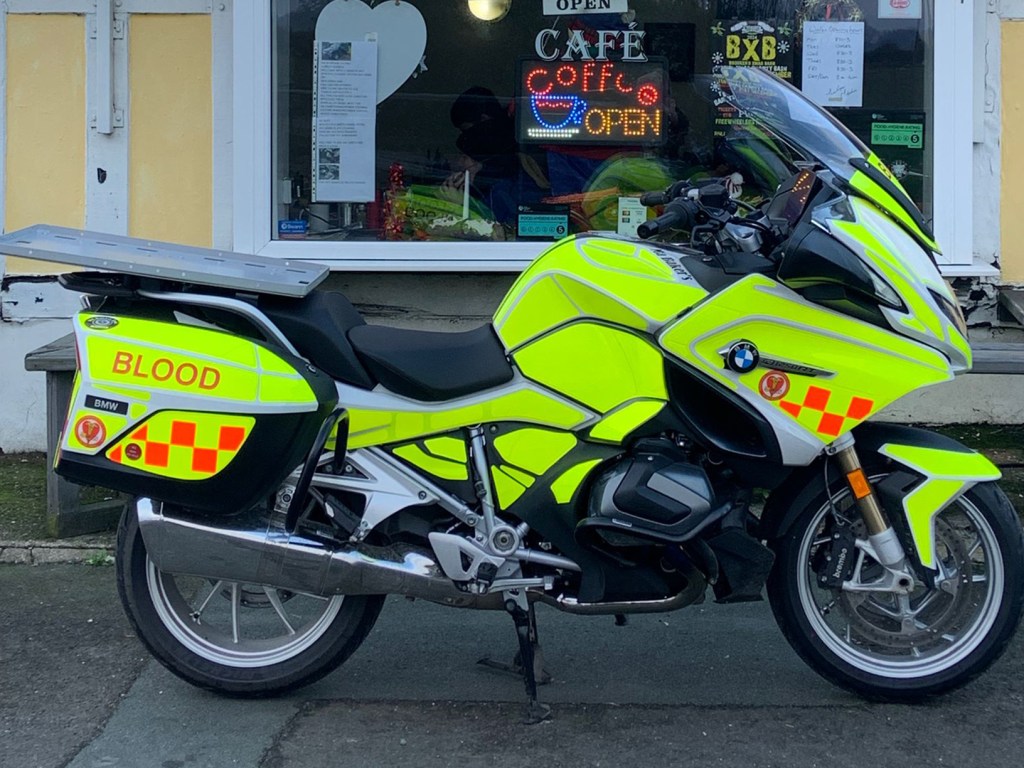
Many of the SSCBB fleet have been funded through the generosity of organisations, trusts and companies, while the ongoing running costs are covered through the charity’s own fundraising efforts. Each of the bikes is given a name, often in honour of someone who has made a meaningful contribution to the charity.
Note: They have also recently expanded their fleet with four Blood Cars, all Dacia Joggers.
How my Blood Bikes Journey Began
After my initial enquiry, I was invited to an online induction meeting with my local Blood Bike group. The induction session focused heavily on the systems and procedures used by the charity. This might sound administrative, but it quickly became clear how important this foundation is. Before any riding happens, you need to understand how requests are received, prioritised, allocated and coordinated.
Along with other applicants, we were also introduced to the processes and vehicles used by the charity. Although motorcycles are the most recognisable part of Blood Bikes, many groups also operate cars for use in poor weather or when larger loads need to be moved.
One aspect that stood out during the induction was the emphasis placed on the relationship between riders and controllers. Before this meeting, my focus had naturally been on the riding element. However, as expected, Blood Bikes is a team effort. Controllers manage requests, plan routes and coordinate riders, ensuring that urgent deliveries are completed efficiently and safely. Understanding this teamwork early on gave me a much broader appreciation of the service. It is important to note that there are also various other roles within the charity, such as speakers and fund raisers.
As it was a couple of hours in duration, there was far more covered during the induction than I can summarise here, but needless to say, it provided a strong introduction to the professionalism and dedication behind the charity.
Understanding the Training Pathway
The induction call provided a clear overview of the steps required to become operational as a Blood Biker or controller. For riders, these include:
- A riding assessment with a qualified advanced riding examiner.
- A blood handling course.
- A local induction at the blood bike storage location – where you are taken through the bikes, the equipment and the processes.
Once the above steps are completed, you will go through the process to confirm you are safe and ready to ride. Once this is done, you can arrange the required liveried clothing and sign up for your first shifts.
The Riding Evaluation
Let’s take a moment to focus on the riding evaluation. Even though I already hold an advanced riding qualification, this assessment felt very different. Whilst the examiner helped put me at ease, I still felt noticeably more nervous.
I think the added responsibility of the role contributes to a level of pressure that’s hard to describe. Knowing that the riding standard directly impacts the transport of items essential for patient care definitely raised the stakes for me and it took me a little while to fully settle into the assessed ride.
I did meet the required standard and passed the assessment, which was, of course, the goal. The examiner also provided feedback on areas for improvement, which was invaluable. Even without this feedback, I was self-reflective enough to recognise where my riding could have been better. But that’s exactly what advanced riding is about – it’s about continuous improvement.
The riding evaluation lasted around an hour and a half in total and was a really valuable experience from start to finish. What I particularly appreciated was the opportunity to chat with the examiner afterwards, which went far beyond simply discussing the test itself. We talked about the wider role and responsibilities of a Blood Biker, the standards expected of volunteers, and the importance of professionalism and reliability when supporting the NHS. It was a great chance to put the assessment into context and to better understand the commitment and teamwork involved in the role.
So What Happens Next
I am now pencilled in for the remaining stages of my training pathway and hope to complete them over the coming weeks.
There is still more to learn before I can begin riding operational shifts for Shropshire, Staffordshire, Cheshire Blood Bikes, but my journey is well underway. I am looking forward to continuing the training and, in time, contributing to the vital work Blood Bike volunteers carry out every day.
Taking this step feels like a genuine milestone in my motorcycle journey and I am very proud to be part of something as rewarding as volunteering as a Blood Bike rider.

 KILN MOTO
Leave a comment