
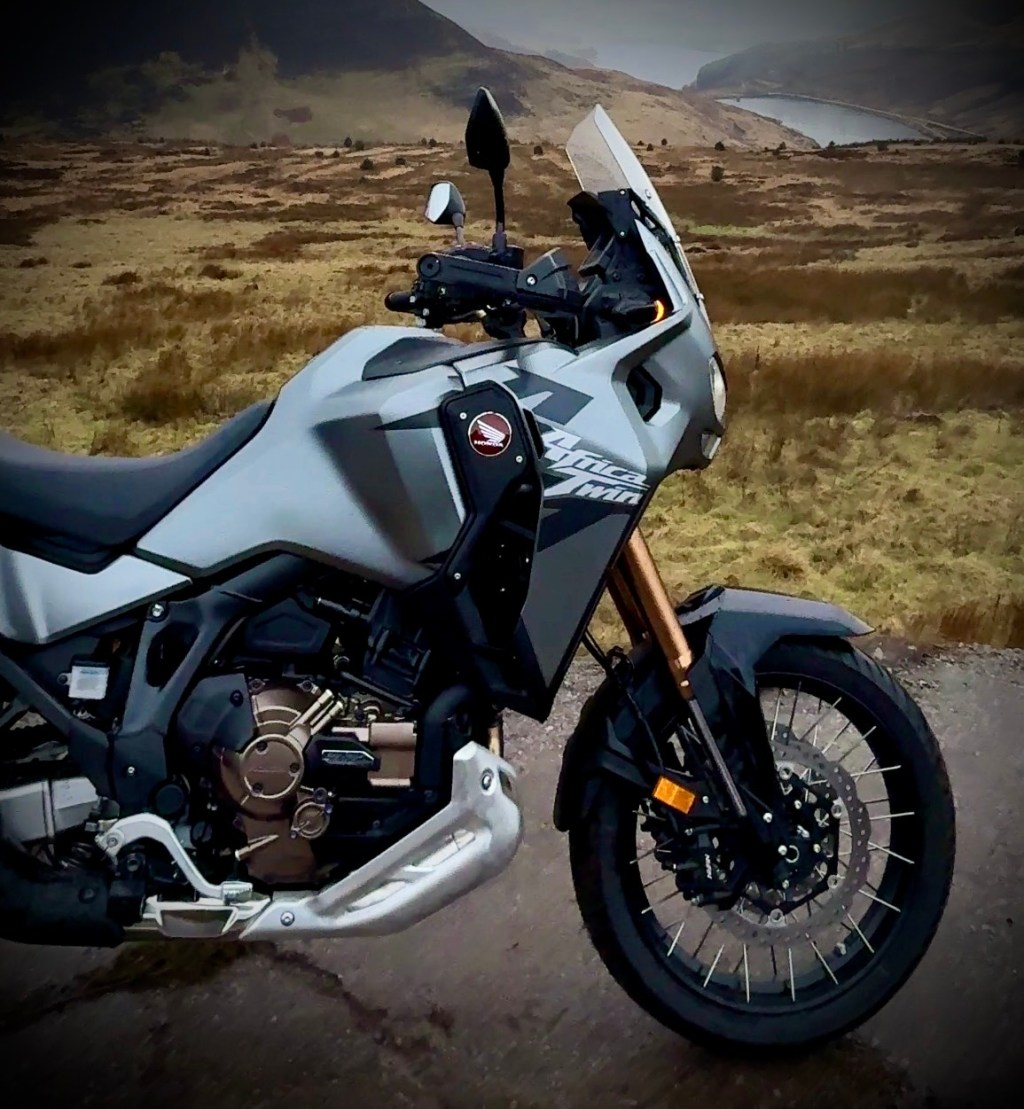
Today marked a significant moment in my motorcycling journey. I handed over the keys to my Triumph Tiger 1200 Rally Pro and rode home on a 2025 Honda CRF1100L Africa Twin Adventure Sports ES.
It was exciting, but also surprisingly emotional.
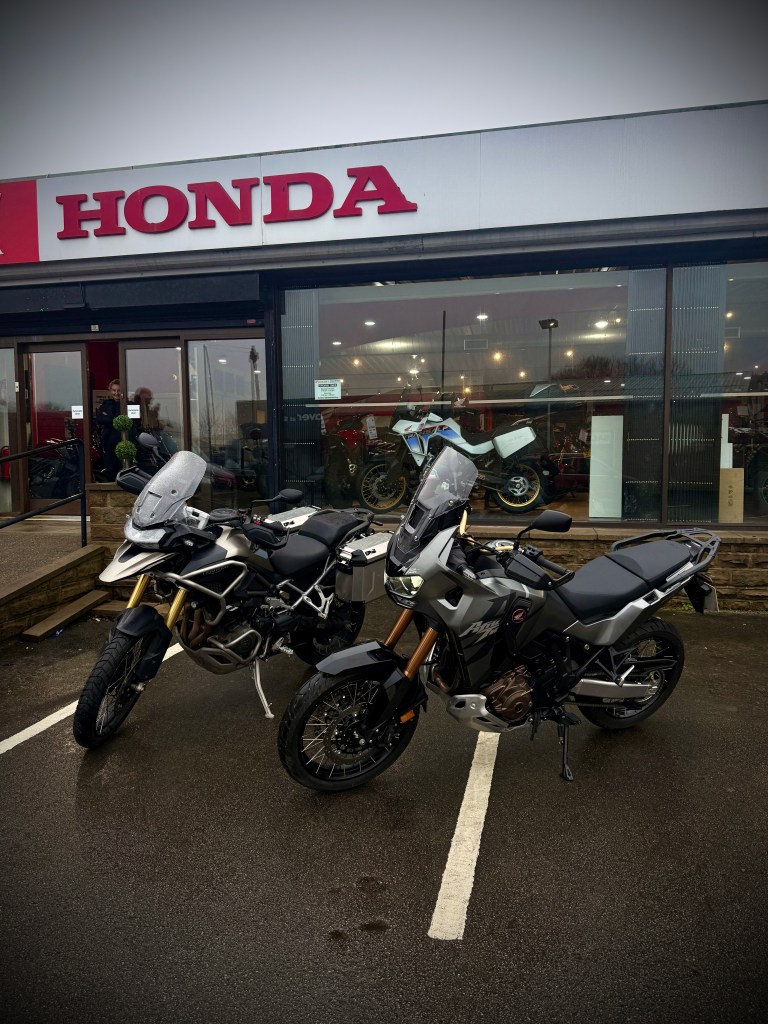
The Tiger had been a brilliant motorcycle. Comfortable over long distances, impressively quick for its size, extremely capable on and off road (in the right hands), and packed with the technology you expect from a modern flagship adventure bike. It never let me down, never caused concern, and never failed to make a ride enjoyable.
This was not a change driven by disappointment in the bike. Quite the opposite.
The decision was about practicality, confidence, and planning for the trips I have ahead.
The Reality of Seat Height and Weight
Adventure bikes have grown steadily taller and heavier over the years. While manufacturers often quote seat height figures, the real-world experience can be very different once you factor in suspension travel, luggage, road camber and fuel load.
At 5 ft 9 ish, I sit right in the middle of the height range where large adventure bikes can become a compromise.
Even with the Tiger’s push button electronic suspension and a lower seat fitted, I could not get my feet flat on the ground. I could manage the bike, of course, but when you combine that limited reach with the weight of a fully fuelled 1200cc adventure bike, every awkward stop begins to feel like a calculated risk.
Most of the time it was perfectly manageable. However, once I began planning longer European tours, I started to think more seriously about the situations I would inevitably face: uneven fuel station forecourts, steep ferry ramps, gravel car parks, mountain passes and fully loaded luggage.
Confidence at a standstill suddenly felt just as important as performance on the move.
The Research Phase
Once the idea took hold, the research began in earnest. I spent weeks reading owner experiences, watching long-term reviews and comparing real-world ergonomics rather than simply headline specifications.
One bike kept appearing in conversations and reviews from riders of a similar height: the Honda Africa Twin Adventure Sports.
The model I became most interested in was the version fitted with Honda’s Dual Clutch Transmission and Showa Electronically Equipped Ride Adjustment suspension, commonly referred to as the ES model.
I booked a test ride.
Within minutes, I knew this bike deserved serious consideration.
First Impressions of the Africa Twin
The Africa Twin felt immediately approachable despite its size. The riding position was upright and natural, and the balance at low speed inspired confidence straight away.
The DCT gearbox was the biggest surprise. Honda has refined this system over several generations, and it now feels smooth, intuitive and well suited to long-distance touring. It removes a layer of fatigue during heavy traffic or long motorway days, while still allowing manual control when you want it.
The electronic suspension was equally impressive. Being able to adjust damping and preload easily is a genuine advantage when switching between solo riding, luggage and touring loads.
But the most important discovery was far simpler: I could properly reach the ground.
Seat Height and Real-World Confidence
The Africa Twin Adventure Sports offers two seat height positions. Interestingly, the lower setting felt too low for my riding position. With the seat in the standard setting, however, everything clicked.
For the first time on a large adventure bike, I could flat-foot the machine.
That might sound minor to some riders, but for touring with luggage and riding in unfamiliar environments, it makes a significant difference. Manoeuvring, stopping on awkward surfaces and handling the bike when fully loaded all feel more controlled and predictable.
That extra confidence was the deciding factor.
Finding the Right Bike
Once the decision was made, the search began. I eventually found the right bike at Craig’s Honda in Shipley, West Yorkshire. After some negotiation, we agreed on a part-exchange deal for the Tiger.
Collection day arrived quickly.
Handing over the Triumph was genuinely difficult. It had done everything asked of it and had never put a foot wrong. Letting it go felt slightly unfair, as though the bike deserved better than being replaced simply because of my height and future travel plans.
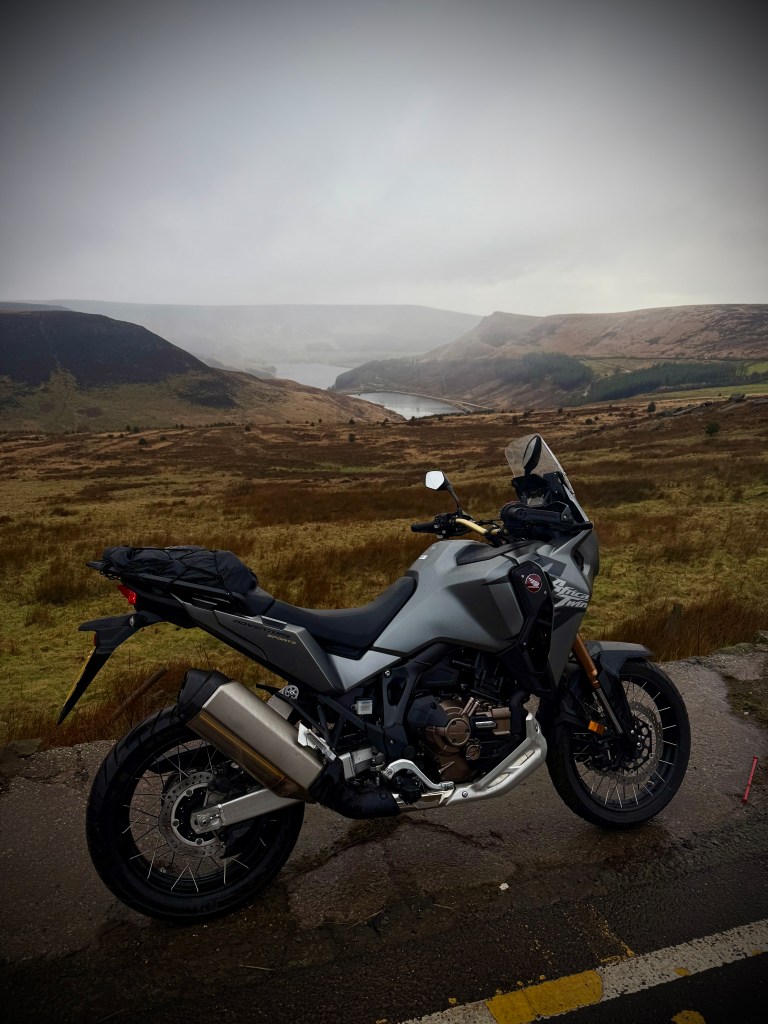
But the moment I set off on the Africa Twin, I knew I had made the right decision. I rode home in pouring rain alongside my friend Gaz, who had kindly joined me for the trip to collect the new bike. We arrived completely soaked through, yet instead of feeling miserable there was a real sense of satisfaction. The Honda had handled everything I threw at it without complaint – country lanes, motorways and a crossing over Saddleworth Moor in truly dreadful conditions – and it never once felt out of its depth.
Accessories
As soon as a new bike arrives, the accessories list inevitably starts to grow. Motorcycling is far from a cheap hobby, but spending money on the right protection and touring kit is an investment that pays off over time, both in preserving the bike and in giving peace of mind on longer trips.
With European travel planned this year, preparing the Africa Twin feels more like sensible groundwork than indulgence.
Luggage is the first priority. Panniers are essential and I already have the bags sorted with my Mosko Moto Backcountry pannier kit. The next step is fitting suitable pannier racks, and I have been looking closely at options from Honda, Givi, Touratech, Outback Motortek and SHAD. The Outback Motortek racks appear to work well with the Mosko Moto mounting system, so that is currently the most likely direction.
Protection comes next. Even with the new confidence that comes from being able to flat-foot the Africa Twin, drops are almost inevitable if the bike sees any off-road use. Proper crash bars and engine protection feel like a sensible precaution, with brands such as Outback Motortek, SW-Motech, R&G and Touratech all under consideration.
Additional lighting is also high on the list. Long travel days often begin early or end late, so improving visibility and presence on the road is important. I have not fully researched this yet, but Denali’s integrated lighting and visibility systems are already catching my attention.
Finally, tyres. Dunlop’s Trailmax Raid tyres are currently the front runner, offering a promising balance between road performance and the ability to handle gravel and rougher terrain during touring.
The spending on accessories may have not yet begun, but these upgrades feel like an investment in the adventures ahead.
If you have experience with any of the accessories mentioned, or if there is something you would strongly recommend for the Africa Twin, I would genuinely love to hear your thoughts. Real-world feedback from other riders is often far more valuable than any spec sheet, so please feel free to share your suggestions in the comments below.
I will be documenting the build and the touring preparation as it develops, so this is very much the beginning of the journey rather than the finished setup.
Motorcycle Accessory Manufactures
If you are a manufacturer or supplier of adventure motorcycle accessories and would like your products to be considered as part of the build, I am always open to conversations. I am happy to provide honest, real-world feedback based on proper use and long-distance touring experience.
Final Thoughts
This year’s riding plans centre on touring in Europe. Long motorway stretches, mountain passes, ferry crossings, B&B’s and occasional gravel tracks are all part of the plan.
With the Africa Twin, I already feel confident not only while riding but also when stopping, manoeuvring and living with this bike day to day on the road.
The Tiger 1200 Rally Pro was an outstanding motorcycle. Saying goodbye was not easy. However, the Africa Twin feels like the right partner for the adventures ahead.
Sometimes the best bike is not the most powerful or the most technologically advanced. Sometimes it is simply the one that fits you best.

 KILN MOTO
Leave a comment