
The Journey to Advanced Rider
As a motorcycle enthusiast, there’s nothing quite like the thrill of the ride. From the rumble of the engine to the wind rushing past, motorcycling offers an unparalleled sense of freedom and adventure. But beyond the joy of riding, there’s also a deep sense of responsibility and a commitment to safety. That’s why I decided to take my riding skills to the next level by pursuing the advanced motorcycle test with the Institute of Advanced Motorists (IAM).
I’m excited to share the journey of passing my test with a First, scoring a 1 in every category!
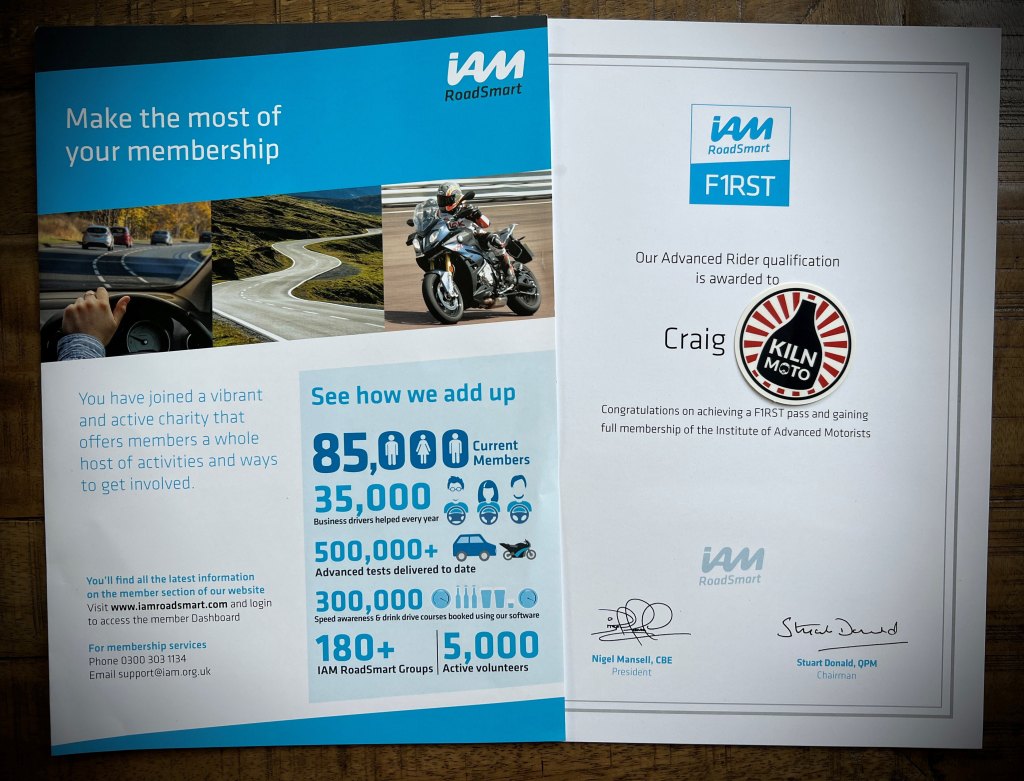
So, why write about my experience? Writing this blog post is more than just a way to celebrate my achievement; it’s an opportunity to inspire fellow riders to strive for excellence and prioritise safety on the road. By sharing the insights and techniques I’ve learned, I hope to encourage others to consider advanced training and to foster a community of skilled and conscientious motorcyclists. So, if you’re passionate about riding and eager to improve your skills, read on—and don’t forget to check out my other posts for more tips, stories, and adventures on two wheels!
IPSGA
One of the core concepts that underpinned my training was IPSGA. This acronym stands for Information, Position, Speed, Gear, and Acceleration, and it’s a systematic approach to riding that enhances safety and control.
- Information – The first step is gathering information. This involves constantly scanning your environment for potential hazards and changes. It’s about being aware of everything around you, from other vehicles and pedestrians to road conditions and weather.
- Position – Next is positioning. Proper positioning on the road can make a huge difference in visibility and safety. It’s about being in the right place at the right time, giving yourself the best view of the road ahead, and making sure others can see you.
- Speed – Speed management is crucial. This doesn’t just mean sticking to speed limits; it’s about adjusting your speed according to the conditions. Whether you’re approaching a bend, entering a built-up area, or riding in poor weather, your speed should be appropriate and safe.
- Gear – Choosing the right gear ensures that your motorcycle responds correctly. Being in the right gear gives you the power and control you need, whether you’re accelerating, decelerating, or maintaining a steady pace.
- Acceleration – Finally, there’s acceleration. Smooth and controlled acceleration, especially as you leave a hazard, helps maintain stability and control of the bike. It’s the final touch that brings everything together, ensuring a safe and enjoyable ride.
The Training and the Test
My journey began with intensive training sessions with Steve, just one of the many dedicated IAM observers. These experienced riders volunteer their time to share their knowledge and expertise, providing invaluable insight, feedback and guidance. I can’t thank them enough for their patience and commitment.
- Training Sessions
Each session concentrated on various facets of riding, ranging from mastering the IPSGA technique to refining my fundamental skills and boosting my confidence. My observer guided and motivated me, imparting techniques to enhance my observation skills, hazard perception, cornering, and overtaking abilities. These topics, among many others, are designed to offer a comprehensive education for motorcyclists, emphasising safety, control, and enjoyment on the road.
Once your accessor feels you meet the required test standard they put you forward for a second opinion in the form of a Pre Test with a national assessor. - Pre-test
As the day arrived for my pre-test, that’s when the nerves really kicked in. I’m not normally a nervous person but for reason I was rattled. I know it’s perfectly normal to feel anxious in such moments, but I’ll be honest, I certainly felt the pressure mounting. I suppose it was down to the fact that the achievement of passing my advanced motorcycle test meant a lot too me. Thankfully, my assessor quickly put me at ease, reassuring me that nerves were a natural part of the process and reminded me to focus on the techniques I had practiced.
Luckily the national assessor agreed with Steve, I was ready and just a couple of weeks later, I received my test date. - Test Day
As test day arrived, I felt ready but still a little nervous but way less then my pre-test. The examiner, a seasoned rider himself as both an examiner and a former police rider, made me feel at ease and provided clear instructions. The test was comprehensive, covering urban roads, rural routes, and high-speed sections. I had to demonstrate my ability to apply the IPSGA technique consistently and effectively.
The best advice I can offer from my experience is to move on quickly if you make a mistake. Put it behind you and focus on the next hazard ahead; dwelling on a mistake will disrupt your concentration. During my own advanced motorcycle test, I was convinced I had made a significant error when I considered an overtake that quickly became unachievable due to changing conditions. I tucked back into my lane and continued. Speaking to the examiner afterward, he mentioned that if I had persisted with the overtake, it would have been a serious fault. However, he praised my decision to reassess the situation and prioritise safety for myself and others. This experience taught me a valuable lesson: we are human and will sometimes perceive opportunities for certain maneuvers. The training I received from Steve emphasised the importance of continuously assessing hazards and adapting plans to stay safe.
Passing with a First
As the test concluded, and the examiner delivered the verdict: I had passed with a First, scoring a 1 in all areas! For those unfamiliar with the scoring system:
- 1 means “Exceeded the required standard”
- 2 means “Met the required standard”
- 3 means “Does not yet meet the required standard”
So, scoring a 1 in every category surpassed my greatest expectations. The examiner’s feedback was incredibly positive. He praised my observation skills, smooth handling, and consistent application of IPSGA. I owe this success to the observers who trained me.
Encouragement to Fellow Riders
Passing the advanced motorcycle test was a significant milestone in my riding journey, but it’s just the beginning. I encourage all my fellow riders to consider advanced motorcycle training. It’s not just about passing a test; it’s about becoming a better, safer rider. The skills you learn will make every ride more enjoyable and reduce the risks on the road.
I hope by sharing my journey and the techniques I’ve mastered, it may inspire others to embark on their own path to advanced riding. Remember, the road to excellence is a continuous journey, and there’s always more to learn and experience.
If you enjoyed reading about my experience, be sure to check out my other blog posts or comment below on your own experiences!
Until next time – work hard, ride safe!
Craig – KILN MOTO


 KILN MOTO
Leave a comment